
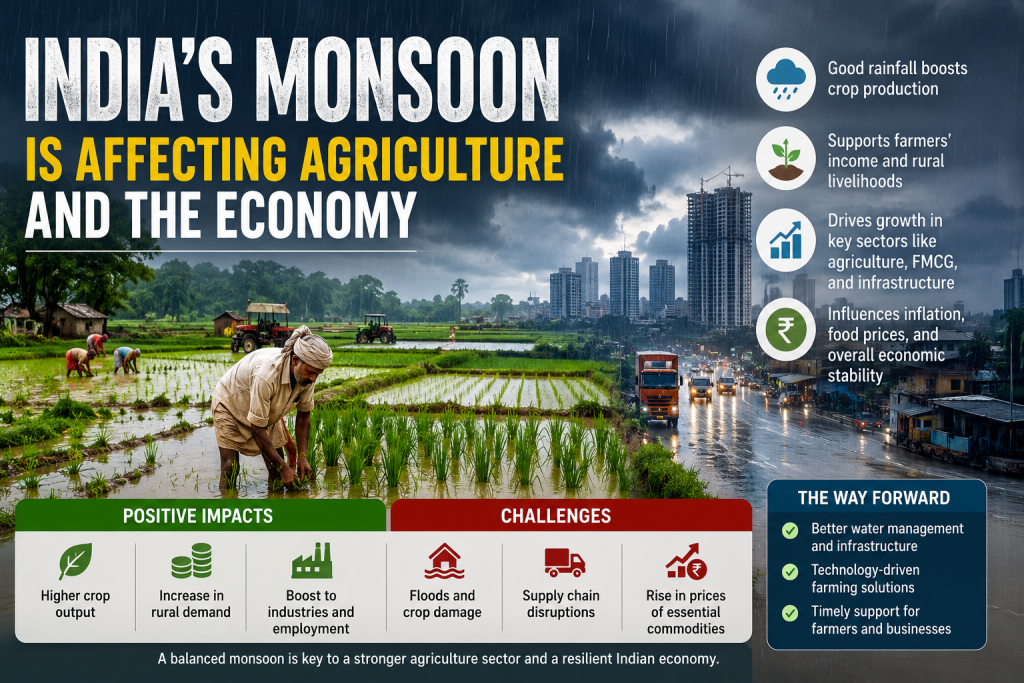

India’s annual monsoon is more than just a weather event—it is the foundation of the country’s agricultural system and a major driver of economic activity. Every year, the southwest monsoon brings rainfall that supports millions of farmers, replenishes water reservoirs, and influences industries ranging from food production to energy generation. Since nearly half of India’s farmland still depends on rainfall rather than irrigation, the success or failure of the monsoon has far-reaching consequences.
In 2026, the monsoon once again plays a crucial role in shaping agricultural output, food prices, rural incomes, and overall economic growth. While good rainfall can boost crop production and strengthen the economy, uneven or excessive rainfall can create serious challenges.
The Importance of the Monsoon for Indian Agriculture
Agriculture remains one of India’s largest employment sectors, providing livelihoods to millions of people. Crops such as rice, cotton, soybean, pulses, sugarcane, and maize rely heavily on monsoon rainfall during the kharif growing season.
A timely and well-distributed monsoon allows farmers to:
- Begin sowing on schedule.
- Improve crop growth and yields.
- Reduce irrigation costs.
- Increase farm income.
- Strengthen food security.
However, delayed rainfall, prolonged dry spells, or sudden floods can damage crops and reduce productivity. This uncertainty makes the monsoon one of the most closely watched seasonal events in the country.
Impact on Food Production
Rainfall directly influences India’s food supply. When monsoon conditions are favorable, agricultural production increases, leading to abundant harvests and stable food availability.
Higher crop production benefits consumers by:
- Increasing the supply of vegetables and grains.
- Helping stabilize food prices.
- Supporting exports of agricultural products.
- Improving the availability of livestock feed.
On the other hand, poor rainfall may reduce harvests, resulting in lower supplies and higher prices for essential food items.
Effect on Rural Economy
A successful monsoon significantly improves the financial condition of rural households. Higher crop yields often translate into increased income for farmers, allowing greater spending on goods and services.
This additional income stimulates demand for:
- Farm machinery
- Fertilizers
- Consumer goods
- Two-wheelers
- Construction materials
- Education and healthcare
As rural consumption grows, many businesses benefit, creating a positive ripple effect throughout the economy.
Influence on Inflation
Food prices contribute significantly to India’s inflation rate. Since vegetables, fruits, cereals, and pulses depend on weather conditions, monsoon performance has a direct impact on inflation.
A healthy monsoon generally helps:
- Increase agricultural output.
- Keep food prices stable.
- Reduce inflationary pressure.
- Support household purchasing power.
Conversely, crop shortages caused by drought or flooding often lead to higher prices, affecting both urban and rural consumers.
Water Resources and Energy
The monsoon replenishes rivers, lakes, groundwater reserves, and reservoirs across India. Adequate rainfall ensures sufficient water for irrigation, drinking purposes, and industrial use.
Hydroelectric power generation also depends heavily on reservoir levels. Good rainfall increases water storage, enabling power plants to produce more clean electricity while reducing dependence on expensive fossil fuels.
Water availability also benefits manufacturing industries that require continuous water supplies for production processes.
Challenges of Extreme Weather
Climate variability has made India’s monsoon increasingly unpredictable. Instead of steady rainfall spread over several months, many regions now experience:
- Extremely heavy rainfall within short periods.
- Flash floods.
- Landslides.
- Long dry spells.
- Heatwaves before monsoon arrival.
These changing weather patterns create difficulties for farmers who must decide when to sow crops and manage irrigation efficiently.
Excess rainfall can destroy standing crops, while insufficient rainfall can lead to drought conditions that reduce agricultural output.
Government Initiatives
To reduce dependence on unpredictable weather, India continues investing in agricultural resilience through several initiatives.
Key areas of focus include:
- Expansion of irrigation infrastructure.
- Crop insurance programs.
- Weather forecasting systems.
- Climate-resilient farming techniques.
- Promotion of drought-resistant crop varieties.
- Digital advisory services for farmers.
Improved weather forecasting allows farmers to make better decisions regarding planting, fertilization, and harvesting.
Economic Outlook
The monsoon influences many sectors beyond agriculture. Good agricultural performance contributes to stronger GDP growth by increasing rural demand and supporting industries connected to farming.
Sectors that often benefit include:
- Food processing
- Fertilizers
- Agricultural equipment
- Logistics
- Retail
- Banking and rural finance
Financial institutions also experience improved loan repayments when farmers enjoy successful harvests.
However, poor monsoon conditions may slow economic growth by reducing agricultural income and increasing inflation.
Looking Ahead
As climate change continues to influence global weather systems, India’s agricultural sector faces new challenges in adapting to changing rainfall patterns. Investments in irrigation, modern farming technology, water conservation, and climate-smart agriculture will become increasingly important.
Technology such as satellite monitoring, artificial intelligence, precision farming, and digital weather forecasting is helping farmers make more informed decisions and reduce weather-related risks.
While the monsoon will always remain a critical factor in India’s economy, improved infrastructure and innovative agricultural practices can help reduce vulnerability and ensure sustainable growth.
Conclusion
India’s monsoon remains the backbone of the country’s agricultural and economic landscape. Good rainfall supports higher crop production, boosts rural incomes, stabilizes food prices, and strengthens economic growth. At the same time, irregular or extreme weather events highlight the importance of climate adaptation and resilient farming practices. As India modernizes its agricultural sector, combining traditional farming knowledge with advanced technology will be essential to securing food production and economic stability for the future.