
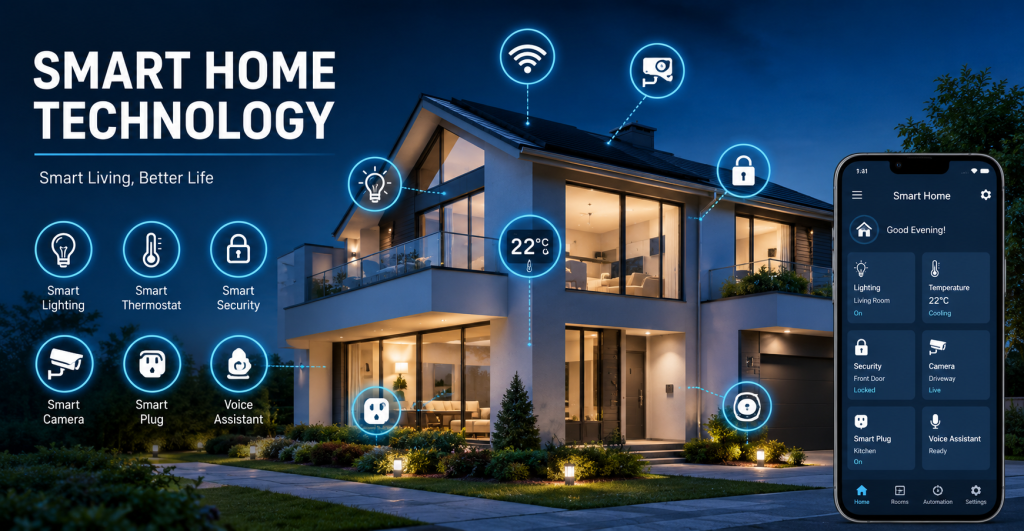

Smart home technology has rapidly evolved from a futuristic concept into an essential part of modern living. As digital innovation continues to reshape everyday life, homeowners are increasingly embracing connected devices that improve convenience, security, energy efficiency, and overall quality of life. From voice-controlled assistants and smart lighting systems to intelligent security cameras and automated appliances, smart home technology is revolutionizing how people interact with their living spaces.
A smart home refers to a residence equipped with internet-connected devices that can communicate with each other and be controlled remotely through smartphones, tablets, or voice assistants. These systems enable homeowners to automate routine tasks, monitor their homes in real time, and customize settings according to personal preferences. The growing availability of affordable smart devices and high-speed internet connectivity has accelerated adoption across both developed and emerging markets.
The Evolution of Smart Homes
The concept of home automation dates back several decades, but significant advancements in wireless communication, cloud computing, and artificial intelligence have transformed the industry. Early home automation systems were expensive and complex, limiting their use to luxury residences. Today, smart home devices are more accessible, user-friendly, and compatible with a wide range of platforms.
Modern smart homes integrate multiple technologies into a unified ecosystem. Devices such as smart thermostats, connected doorbells, automated blinds, and intelligent speakers can work together to create a seamless living experience. Users can control these systems remotely, schedule automated routines, and receive instant notifications about home activities.
Key Components of Smart Home Technology
Smart Lighting
Smart lighting systems allow users to control brightness, color, and schedules through mobile applications or voice commands. Homeowners can create customized lighting scenes for different activities such as reading, working, or relaxing. Automated lighting also contributes to energy savings by turning lights off when rooms are unoccupied.
Smart Security Systems
Security remains one of the primary drivers of smart home adoption. Modern security solutions include smart locks, video doorbells, surveillance cameras, motion sensors, and alarm systems. These devices provide real-time monitoring and alerts, allowing homeowners to keep track of their property from virtually anywhere.
Smart Thermostats
Smart thermostats learn user preferences and adjust temperature settings automatically. By optimizing heating and cooling schedules, these devices help reduce energy consumption while maintaining comfort. Many systems provide detailed energy usage reports that help homeowners make informed decisions about efficiency improvements.
Voice Assistants
Voice-controlled assistants have become central hubs for many smart homes. Users can manage connected devices, play music, check weather updates, create reminders, and access information through simple voice commands. The convenience of hands-free control has significantly increased consumer interest in smart home ecosystems.
Smart Appliances
Connected appliances such as refrigerators, washing machines, ovens, and vacuum cleaners are transforming household management. These devices offer remote control capabilities, maintenance alerts, and energy optimization features that simplify daily tasks and improve operational efficiency.
Benefits of Smart Home Technology
Enhanced Convenience
One of the most significant advantages of smart home technology is convenience. Homeowners can automate repetitive tasks and control multiple devices through a single platform. Whether adjusting room temperature, locking doors, or turning off lights, users can manage their homes effortlessly.
Improved Energy Efficiency
Smart home systems help reduce energy consumption by optimizing the operation of appliances, lighting, and climate control systems. Automated scheduling and occupancy-based controls minimize unnecessary energy usage, leading to lower utility bills and reduced environmental impact.
Greater Security and Safety
Advanced monitoring capabilities provide homeowners with greater peace of mind. Real-time alerts, remote surveillance access, and intelligent threat detection help enhance security. Smart smoke detectors and water leak sensors can also notify residents immediately when potential hazards are detected.
Increased Property Value
Homes equipped with modern smart technologies often attract greater buyer interest. As connected living becomes more mainstream, smart features are increasingly viewed as valuable property enhancements that improve functionality and appeal.
Artificial Intelligence and Smart Homes
Artificial intelligence is playing an increasingly important role in the evolution of smart homes. AI-powered systems can analyze user behavior, learn preferences, and make proactive adjustments. For example, intelligent thermostats can automatically optimize temperature settings based on occupancy patterns, while security systems can distinguish between normal and suspicious activities.
Machine learning algorithms enable devices to become more efficient over time, delivering personalized experiences tailored to individual household needs. As AI capabilities continue to improve, smart homes are expected to become even more responsive and intuitive.
Challenges and Concerns
Despite its advantages, smart home technology faces several challenges. Privacy and cybersecurity remain major concerns for consumers. Since connected devices collect and transmit data, protecting sensitive information is essential. Manufacturers are investing heavily in encryption, authentication protocols, and software updates to address security vulnerabilities.
Compatibility issues can also arise when devices from different brands use separate communication standards. Industry efforts to promote interoperability are helping create more unified ecosystems that simplify installation and management.
Additionally, some consumers may hesitate to adopt smart home technologies due to concerns about cost, complexity, or reliability. Continued innovation and user-friendly design are expected to address these barriers over time.
Future Trends in Smart Home Technology
The future of smart home technology appears highly promising. Several emerging trends are expected to shape the next generation of connected living environments:
| Trend | Expected Impact |
|---|---|
| AI Integration | More personalized automation and predictive decision-making |
| Energy Management | Advanced monitoring and optimization of household energy use |
| Smart Health Monitoring | Connected devices supporting wellness and elderly care |
| Edge Computing | Faster processing with reduced cloud dependency |
| Interoperability Standards | Improved compatibility across brands and platforms |
Another major trend involves sustainability-focused solutions. Smart energy systems, solar integration, and intelligent resource management tools are becoming increasingly important as homeowners seek environmentally responsible living options.
Conclusion
Smart home technology is fundamentally changing how people interact with their living environments. By combining connectivity, automation, artificial intelligence, and advanced analytics, smart homes offer unprecedented levels of convenience, efficiency, security, and personalization. As technology continues to evolve and become more affordable, adoption is expected to expand across a broader range of households worldwide.
The ongoing development of intelligent ecosystems, enhanced cybersecurity measures, and energy-efficient solutions will further strengthen the role of smart home technology in everyday life. What was once considered a luxury is quickly becoming a standard feature of modern homes, paving the way for a more connected, comfortable, and sustainable future.