
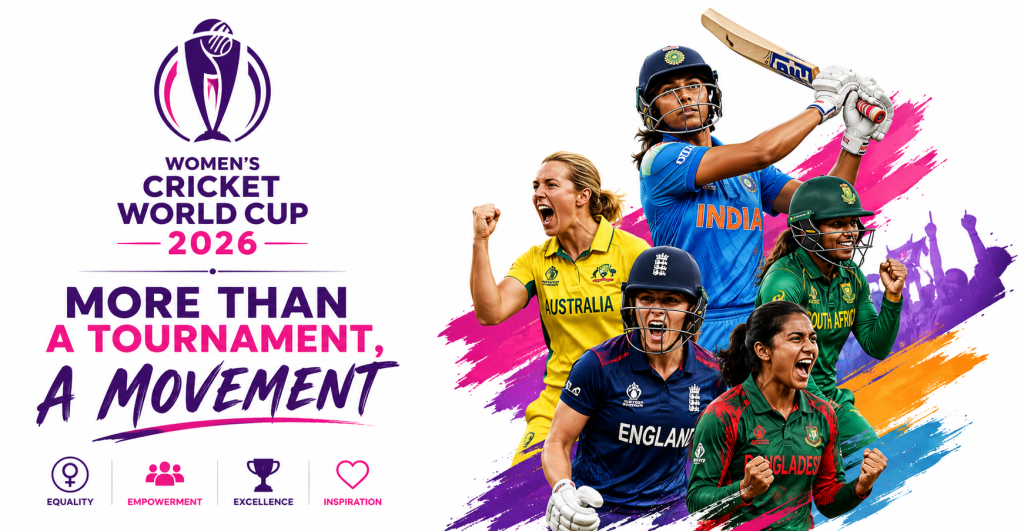

In July 2026, the cricketing world is once again turning its attention to the biggest stage in women’s T20 cricket. The ICC Women’s T20 World Cup has become far more than a sporting competition; it is now a global celebration of talent, resilience, and progress. What was once considered a niche segment of the sport has evolved into a major international attraction, drawing millions of viewers, inspiring young athletes, and changing the way the world perceives women’s sports.
The growing excitement surrounding the Women’s T20 World Cup is not just about who lifts the trophy. It reflects a broader transformation taking place across the sporting landscape. Women’s cricket is experiencing unprecedented growth, and the 2026 edition of the tournament stands as another milestone in that remarkable journey.
The Rise of Women’s Cricket
Over the last decade, women’s cricket has undergone a dramatic transformation. Increased investment from cricket boards, improved professional structures, and greater media coverage have created opportunities that previous generations of players could only dream about.
The change has been visible in every aspect of the game. Matches are now broadcast to global audiences, sponsorship deals are growing, and domestic leagues have become important pathways for emerging talent. Young girls who once lacked role models in cricket can now watch world-class athletes competing on the biggest stages and imagine themselves following the same path.
The Women’s T20 World Cup has played a crucial role in this evolution. Every edition has introduced new stars, produced unforgettable moments, and expanded the sport’s reach beyond traditional cricketing nations.
Why the 2026 Tournament Matters
The 2026 Women’s T20 World Cup arrives at a time when women’s sports are enjoying unprecedented popularity worldwide. Across different disciplines, female athletes are attracting larger audiences, securing major sponsorships, and breaking attendance records.
Cricket is very much a part of this trend.
The tournament provides an opportunity for established teams to reinforce their dominance while allowing emerging nations to challenge the traditional hierarchy. It also serves as a platform where players can inspire future generations through their performances and leadership.
For many fans, the competition represents the highest level of T20 cricket. The fast-paced nature of the format creates excitement from the very first ball, making every match important and every result significant. Unlike longer formats, a single brilliant innings or an exceptional bowling spell can completely change the course of a game.
This unpredictability is one of the reasons why the tournament continues to attract new audiences year after year.
The Global Appeal of the Women’s Game
One of the most encouraging aspects of women’s cricket is its expanding international footprint. While countries such as Australia, England, India, New Zealand, and South Africa have traditionally been among the strongest teams, many newer cricketing nations are making rapid progress.
The World Cup provides a stage where different playing styles, cultures, and cricketing philosophies come together. Fans get the opportunity to watch athletes from diverse backgrounds compete with equal determination and passion.
This global appeal is helping cricket grow beyond its traditional markets. Every successful tournament creates new fans, encourages grassroots participation, and strengthens the sport’s international presence.
The increasing competitiveness of international women’s cricket is another positive sign. Matches are becoming more closely contested, and the gap between leading teams and developing nations continues to narrow. This level of competition benefits everyone involved, from players and coaches to broadcasters and supporters.
The Role of Professional Leagues
The growth of women’s cricket cannot be discussed without acknowledging the impact of professional franchise leagues.
Competitions around the world have provided players with opportunities to compete against elite talent on a regular basis. These leagues have improved skill levels, increased financial opportunities, and exposed players to high-pressure situations that prepare them for international tournaments.
Young cricketers now have clear development pathways. Instead of relying solely on international cricket for exposure, they can gain experience in competitive domestic environments and learn from some of the best players in the world.
As a result, the overall quality of cricket on display at the Women’s T20 World Cup continues to improve. Fans are witnessing higher standards of batting, bowling, fielding, and tactical awareness than ever before.
More Than Entertainment
While the World Cup is undoubtedly a major sporting spectacle, its significance extends beyond the boundaries of the cricket field.
Women’s sports have historically faced challenges related to visibility, funding, and recognition. Every successful global tournament helps challenge outdated perceptions and demonstrates the value of investing in female athletes.
When young girls watch players competing before packed stadiums and global television audiences, they receive a powerful message: their dreams are valid, and their ambitions deserve support.
Representation matters. Seeing successful female athletes in leadership roles, handling pressure, and performing at the highest level helps create a culture where talent is recognized regardless of gender.
The impact often extends into education, community development, and broader conversations about equality in sports and society.
The Power of Storytelling
One reason the Women’s T20 World Cup resonates with audiences is the human stories behind the competition.
Every player arrives at the tournament carrying a unique journey. Some have overcome financial obstacles, others have balanced education and professional sports, and many have worked tirelessly for years to earn their place on the international stage.
These stories create emotional connections that go beyond statistics and scorecards.
Fans are not simply watching athletes compete; they are witnessing years of sacrifice, discipline, and perseverance. Those personal journeys add depth to the tournament and make victories even more meaningful.
In many ways, the growth of women’s cricket is a collection of thousands of individual success stories coming together to create a larger movement.
Looking Ahead
As the Women’s T20 World Cup 2026 captures global attention, it also offers a glimpse into the future of the sport. The momentum behind women’s cricket shows no signs of slowing down.
More countries are investing in development programs. More broadcasters are recognizing the commercial potential of women’s sports. More young players are choosing cricket as a serious career path. Most importantly, more fans are embracing the women’s game with genuine enthusiasm.
The success of this tournament will not be measured solely by trophies or records. Its true impact will be reflected in the number of young athletes it inspires, the opportunities it creates, and the barriers it helps break.
Conclusion
The ICC Women’s T20 World Cup 2026 is much more than a championship. It is a symbol of how far women’s cricket has come and a reminder of how much potential still lies ahead. The tournament showcases elite athletic performance, celebrates diversity, and demonstrates the growing influence of women’s sports on the global stage.
As millions of fans follow the action, they are witnessing more than cricket matches. They are witnessing a sport in the midst of a historic transformation. Whether through thrilling performances, inspiring stories, or groundbreaking achievements, the Women’s T20 World Cup continues to prove that the future of cricket is brighter, more inclusive, and more exciting than ever before.