
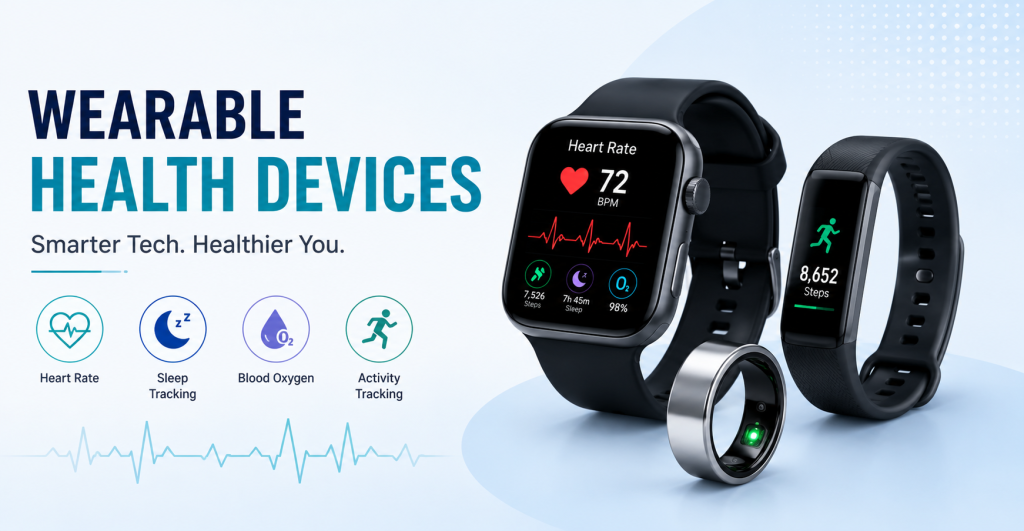

The evolution of wearable health devices is transforming how people monitor, understand, and manage their health. Once limited to counting daily steps, today’s wearable technologies provide real-time insights into heart rate, sleep quality, blood oxygen levels, stress, physical activity, and overall wellness. As artificial intelligence, advanced sensors, and connected healthcare platforms continue to evolve, wearable health devices are becoming an essential part of preventive healthcare and digital wellness.
Consumers are increasingly embracing smartwatches, fitness bands, health rings, biosensors, and wearable patches that provide continuous health monitoring throughout the day. These devices not only encourage healthier lifestyles but also enable users to detect potential health concerns earlier and make informed decisions about their well-being. With technology becoming more sophisticated, wearable health devices are emerging as one of the most influential trends shaping the future of healthcare.
Advanced Sensors Are Expanding Health Monitoring
Modern wearable health devices incorporate highly advanced sensors capable of collecting a wide range of physiological data with remarkable accuracy.
Today’s devices commonly monitor:
- Heart rate
- Blood oxygen saturation (SpO₂)
- Sleep quality
- Daily physical activity
- Stress levels
- Skin temperature
- Calories burned
- Exercise performance
Many premium devices now combine multiple sensors to generate comprehensive wellness reports. Artificial intelligence analyzes these measurements to identify patterns, detect abnormalities, and deliver personalized health recommendations based on individual habits and lifestyle.
Continuous monitoring allows users to gain a better understanding of how factors such as exercise, nutrition, stress, and sleep affect their overall health.
Artificial Intelligence Enhances Personal Wellness
Artificial intelligence has become a driving force behind the growing capabilities of wearable health devices.
Rather than simply displaying raw health data, AI-powered systems interpret information collected over days, weeks, and months to identify meaningful trends. These intelligent platforms can recommend adjustments to exercise routines, sleep schedules, hydration habits, and stress management techniques.
Some wearable devices even generate personalized wellness scores by combining multiple health indicators into easy-to-understand reports.
As AI algorithms continue improving, wearable devices are expected to provide increasingly proactive health insights while helping users adopt healthier daily routines.
Remote Health Monitoring Is Becoming More Common
One of the most significant trends in digital healthcare is the integration of wearable health devices with remote patient monitoring systems.
Healthcare providers can increasingly receive health information from connected wearable devices, allowing patients to share selected health data without frequent in-person visits.
This approach offers several advantages:
- Continuous monitoring between appointments
- Improved management of chronic conditions
- Earlier detection of health changes
- Better patient engagement
- Increased convenience for healthcare providers
Remote monitoring has become particularly valuable for elderly individuals, post-surgical recovery, cardiovascular monitoring, and long-term wellness management.
Wearables Support Preventive Healthcare
Preventive healthcare is becoming one of the strongest drivers behind wearable technology adoption.
Rather than focusing only on treating illness, wearable devices encourage users to maintain healthier lifestyles by tracking activity goals, reminding users to stay active, improve sleep habits, and manage stress levels.
Many applications include wellness coaching, guided breathing exercises, hydration reminders, and personalized fitness recommendations that motivate long-term behavioral improvements.
As preventive healthcare continues gaining importance, wearable technologies are helping shift healthcare toward earlier intervention and continuous wellness management.
| Health Feature | Consumer Benefit |
|---|---|
| Heart Rate Monitoring | Tracks cardiovascular activity in real time |
| Sleep Tracking | Improves sleep quality and recovery |
| Blood Oxygen Monitoring | Provides additional wellness insights |
| Stress Monitoring | Encourages healthier daily habits |
| Activity Tracking | Supports fitness and weight management |
Smart Rings and Wearable Patches Gain Popularity
While smartwatches remain highly popular, newer wearable formats are rapidly gaining consumer attention.
Smart rings offer discreet health monitoring while maintaining long battery life and lightweight designs. They continuously collect sleep, activity, temperature, and heart rate information with minimal interruption to daily life.
Wearable biosensor patches are also becoming increasingly important for healthcare applications. These flexible skin-mounted sensors continuously monitor physiological signals while offering improved comfort compared to traditional medical equipment.
Future wearable devices may become even smaller, lighter, and nearly invisible while delivering more advanced health insights.
Integration with Digital Healthcare Ecosystems
Wearable health devices are becoming more connected with broader digital healthcare ecosystems.
Mobile health applications now synchronize wearable data with:
- Electronic health records
- Telemedicine platforms
- Personal wellness dashboards
- Fitness applications
- Nutrition tracking services
- Mental wellness programs
This integration enables users to manage multiple aspects of their health through a single digital platform while improving communication between patients and healthcare professionals.
Healthcare providers are increasingly exploring secure methods for incorporating wearable-generated health information into clinical decision-making.
Battery Life and Sensor Innovation Continue Improving
Technological innovation continues enhancing the usability of wearable health devices.
Manufacturers are developing:
- Longer-lasting batteries
- Faster wireless charging
- Flexible wearable materials
- More accurate biometric sensors
- Improved waterproof designs
- Enhanced comfort for continuous wear
Researchers are also exploring non-invasive glucose monitoring, hydration sensing, blood pressure estimation, and biochemical analysis through wearable technologies.
These innovations could significantly expand the medical applications of wearable devices over the coming years.
| Emerging Innovation | Potential Impact |
| AI Health Coaching | Personalized wellness guidance |
| Continuous Glucose Monitoring | Better diabetes management |
| Smart Clothing | Full-body health monitoring |
| Wearable Biosensors | Advanced physiological tracking |
| Predictive Health Analytics | Earlier health risk identification |
Privacy and Data Security Remain Important
As wearable devices collect increasing amounts of personal health information, privacy and cybersecurity remain critical priorities.
Manufacturers continue strengthening data encryption, secure cloud storage, user authentication, and transparent privacy policies to protect sensitive health information.
Consumers are also becoming more aware of data-sharing preferences, giving them greater control over how their health information is stored and shared.
Maintaining user trust will remain essential as wearable technologies become increasingly integrated into healthcare systems.
Looking Ahead
Wearable health devices are rapidly transforming from simple fitness accessories into intelligent personal health companions. Advances in artificial intelligence, sensor technology, remote healthcare integration, and predictive analytics are creating more personalized, convenient, and proactive approaches to wellness.
As innovation continues, wearable technologies are expected to become even more accurate, comfortable, and connected, supporting healthier lifestyles while strengthening preventive healthcare worldwide. From smartwatches and health rings to biosensor patches and AI-powered wellness platforms, wearable health devices are reshaping how individuals monitor their health every day.
The future of healthcare is becoming increasingly connected, personalized, and data-driven—and wearable health devices are at the center of this digital transformation.