
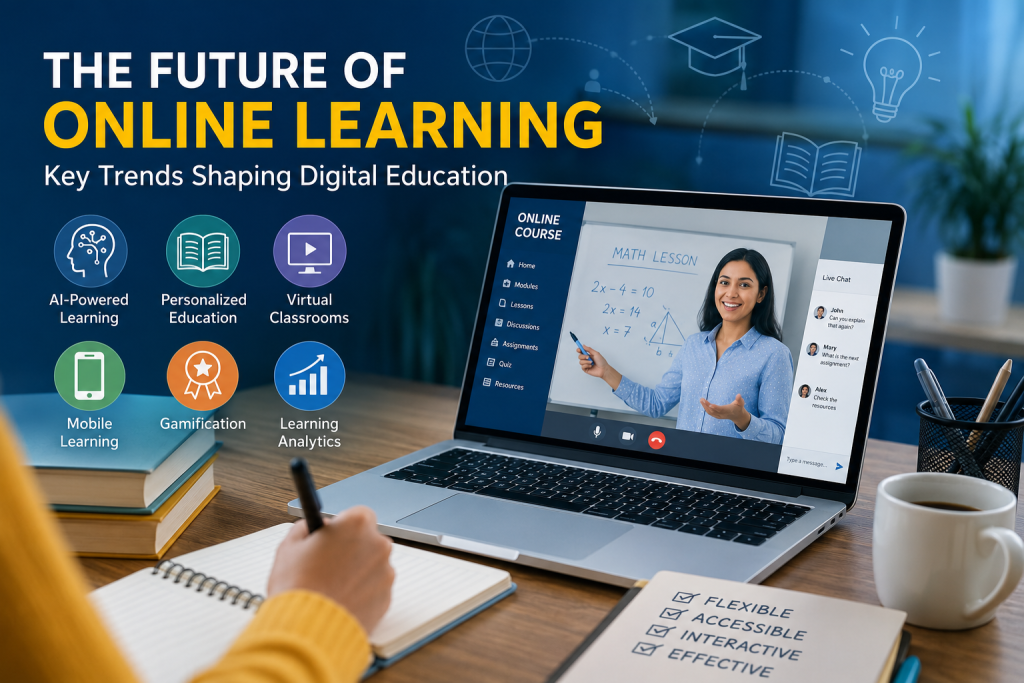

Online learning has evolved from a convenient alternative to traditional education into a mainstream model for acquiring knowledge and professional skills. Advances in digital technology, artificial intelligence, cloud computing, and mobile connectivity have transformed how students, educators, and organizations access education. Today, digital learning is no longer limited to virtual classrooms—it includes AI-powered tutors, immersive learning experiences, personalized study plans, and collaborative online platforms that make education more engaging and accessible.
As governments, universities, and businesses continue investing in digital education infrastructure, online learning is becoming a key driver of workforce development and lifelong learning. From school education and higher education to corporate training and professional certification, digital learning is reshaping education worldwide. With continuous innovation in educational technology (EdTech), the future of online learning promises greater flexibility, improved learning outcomes, and broader access to quality education.
What Is Online Learning?
Online learning, also known as e-learning or digital education, is the process of delivering educational content through internet-based platforms. It enables learners to access courses, lectures, assignments, assessments, and interactive learning materials from virtually anywhere using computers, tablets, or smartphones.
Modern online learning platforms incorporate video conferencing, cloud-based learning management systems (LMS), AI-powered recommendations, gamification, virtual classrooms, and real-time collaboration tools. These technologies create engaging and personalized learning experiences while allowing students to learn at their own pace.
Unlike traditional classroom education, online learning offers flexibility, affordability, and accessibility, making education available to learners regardless of geographical location.
Why Online Learning Is Growing Rapidly
The rapid expansion of online learning is driven by several technological and social factors. Increasing internet penetration, affordable smartphones, and improved broadband connectivity have made digital education accessible to millions of learners worldwide.
Artificial intelligence is revolutionizing education by enabling personalized learning paths, automated assessments, intelligent tutoring systems, and real-time feedback. AI helps educators identify learning gaps while allowing students to receive customized recommendations based on their progress.
Organizations are also investing heavily in employee upskilling and reskilling programs. As industries adopt new technologies, continuous learning has become essential for professionals to remain competitive in the evolving job market.
Additionally, educational institutions are increasingly adopting hybrid learning models that combine classroom instruction with digital platforms, creating more flexible and engaging learning environments.
Key Trends Shaping Digital Education
Several emerging trends are transforming the future of online learning.
Artificial intelligence is enabling adaptive learning systems that personalize educational content according to individual learning styles and performance. AI-powered virtual tutors can answer student questions, explain complex concepts, and provide instant feedback.
Microlearning is gaining popularity by delivering short, focused lessons that improve knowledge retention while fitting into busy schedules. Bite-sized educational content has become especially valuable for corporate training and professional development.
Gamification continues to increase learner engagement through quizzes, rewards, leaderboards, badges, and interactive challenges that make education more enjoyable.
Virtual Reality (VR) and Augmented Reality (AR) are creating immersive learning experiences across fields such as healthcare, engineering, aviation, and science, allowing students to practice real-world scenarios in safe digital environments.
Mobile learning is expanding rapidly as learners increasingly access educational content through smartphones and tablets. Mobile-friendly platforms support learning anytime and anywhere.
Learning analytics is helping educators monitor student performance, identify learning patterns, and improve course effectiveness through data-driven decision-making.
Applications Across Industries
Online learning is transforming education across multiple sectors.
Schools and universities use digital platforms for virtual classrooms, assignments, assessments, and collaborative learning, expanding educational access beyond physical campuses.
Corporate organizations rely on online learning for employee onboarding, compliance training, leadership development, technical certifications, and continuous professional education.
Healthcare institutions use digital education to train medical professionals through virtual simulations, remote learning modules, and continuing medical education programs.
Technology companies provide online certification programs that help professionals develop skills in cloud computing, cybersecurity, artificial intelligence, software development, and data analytics.
Government agencies and nonprofit organizations also use online learning platforms to deliver public education, vocational training, and digital literacy initiatives.
Major Technologies Driving Online Learning
Several technological innovations are accelerating the evolution of digital education.
Artificial intelligence enables intelligent tutoring systems, automated grading, content recommendations, and personalized learning experiences that improve student engagement.
Cloud computing provides scalable infrastructure for hosting virtual classrooms, digital libraries, and collaborative educational resources accessible from anywhere.
Learning Management Systems (LMS) simplify course administration, content delivery, student tracking, and performance evaluation for educational institutions and businesses.
Virtual Reality and Augmented Reality enable experiential learning by allowing students to interact with realistic digital environments that enhance practical understanding.
Blockchain technology is emerging as a secure solution for managing digital certificates, academic records, and credential verification.
Big data and learning analytics help institutions optimize educational programs while identifying student needs and improving learning outcomes.
Challenges Facing Online Learning
Despite significant progress, several challenges continue to affect digital education.
Unequal access to reliable internet connectivity and digital devices remains a major barrier in many regions, limiting opportunities for learners.
Maintaining student engagement during virtual classes can be challenging, especially when courses lack interactive content and collaborative activities.
Cybersecurity and data privacy have become increasingly important as educational platforms collect large amounts of personal and academic information.
Educators also require ongoing training to effectively integrate emerging technologies into teaching methodologies while ensuring high-quality learning experiences.
Balancing screen time with practical, hands-on learning remains another important consideration for educational institutions.
Future Outlook
The future of online learning is expected to become more intelligent, immersive, and personalized. Artificial intelligence will continue enhancing adaptive learning systems capable of understanding individual learning needs and recommending customized educational pathways.
Hybrid education models combining physical classrooms with digital learning platforms will become increasingly common across schools, universities, and corporate environments.
Immersive technologies such as virtual reality and augmented reality will expand practical learning opportunities, particularly in technical and healthcare education.
Lifelong learning will become an essential part of career development as professionals continuously update their skills to meet evolving industry demands.
With ongoing innovation in educational technology, online learning will play a central role in making high-quality education more inclusive, flexible, and accessible worldwide.
Conclusion
Online learning has become one of the most transformative developments in modern education. By combining digital technologies with innovative teaching methods, it is breaking geographical barriers, improving accessibility, and creating personalized learning experiences for millions of people.
As artificial intelligence, immersive technologies, and cloud-based education platforms continue to evolve, digital learning will become even more engaging and effective. Educational institutions, businesses, and governments that embrace these innovations will be better positioned to prepare learners for the rapidly changing digital economy while fostering continuous growth and lifelong learning.