
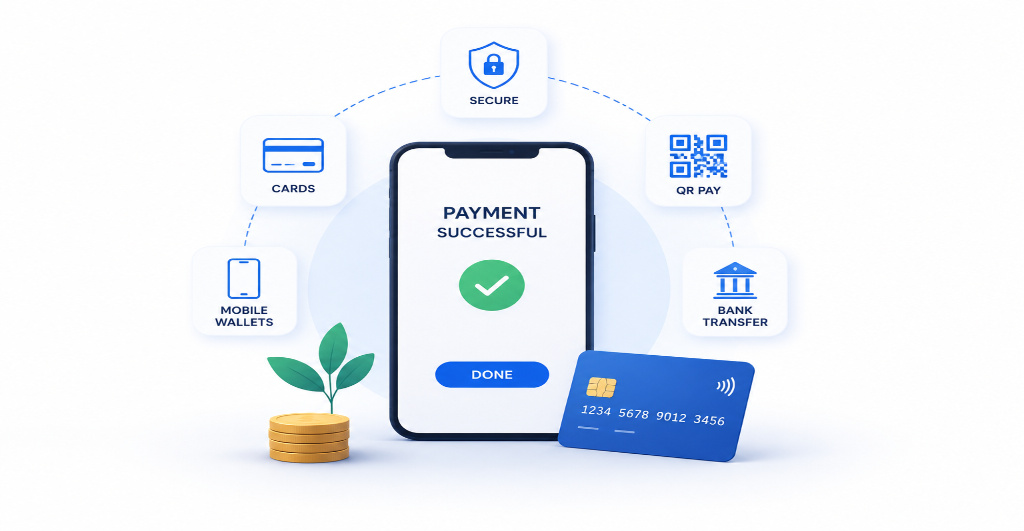

The way people pay for goods and services is evolving faster than ever. From contactless cards and mobile wallets to artificial intelligence-powered fraud detection and real-time bank transfers, the future of online payments is being shaped by rapid technological innovation and changing consumer expectations. As businesses expand globally and digital commerce becomes the norm, payment providers are racing to deliver faster, safer, and more seamless transaction experiences.
The global digital economy continues to grow as consumers increasingly prefer cashless payment methods for shopping, subscriptions, travel, entertainment, and financial services. At the same time, businesses are investing in payment technologies that reduce transaction costs, improve security, and provide frictionless checkout experiences. This transformation is creating new opportunities for fintech companies, merchants, banks, and technology providers worldwide.
Why Online Payments Are Entering a New Era
Online payments have progressed well beyond traditional credit and debit card transactions. Today’s consumers expect multiple payment options, instant processing, and secure authentication regardless of where they shop. Whether purchasing through an e-commerce website, mobile application, social media platform, or connected device, customers want payments to be effortless.
Businesses are responding by integrating digital wallets, buy now, pay later (BNPL) services, open banking solutions, and embedded finance into their payment ecosystems. These innovations not only improve customer convenience but also increase conversion rates and customer loyalty.
The next generation of payment infrastructure will focus on intelligent automation, interoperability, and personalized financial experiences powered by artificial intelligence and cloud computing.
Key Trends Defining the Future of Online Payments
AI-Powered Fraud Prevention
Cybersecurity remains one of the biggest challenges in digital payments. Artificial intelligence and machine learning are helping financial institutions detect suspicious transactions in real time by analyzing customer behavior, device information, transaction history, and spending patterns.
Rather than relying solely on static security rules, AI continuously learns from emerging threats, allowing payment providers to reduce fraud while minimizing false transaction declines. As cyberattacks become more sophisticated, AI-driven security will become a standard feature across payment platforms.
Real-Time Payment Networks
Consumers no longer want to wait hours or even days for payments to settle. Governments and financial institutions worldwide are expanding real-time payment systems that allow funds to move instantly between bank accounts.
Instant payment infrastructure benefits businesses through improved cash flow while giving consumers faster refunds, payroll deposits, and peer-to-peer transfers. As more countries modernize their financial systems, real-time payments are expected to become the default method for domestic transactions.
Growth of Digital Wallets
Digital wallets continue gaining popularity as smartphones become the primary shopping device for millions of consumers. Services such as Apple Pay, Google Pay, PayPal, and regional payment applications simplify checkout by securely storing payment credentials.
Beyond convenience, digital wallets increasingly support loyalty rewards, identity verification, transit payments, event tickets, and cryptocurrency integration. Their expanding capabilities position them as central hubs within the digital financial ecosystem.
Embedded Finance
One of the fastest-growing fintech innovations is embedded finance, which allows businesses to integrate financial services directly into their platforms. Customers can now access loans, insurance, installment payments, or digital banking without leaving the application they are already using.
Retailers, software providers, logistics companies, and online marketplaces are adopting embedded payment solutions to create smoother customer experiences while generating additional revenue streams.
The Rise of Biometric Authentication
Passwords are gradually giving way to biometric authentication methods such as fingerprint recognition, facial recognition, and voice authentication. These technologies offer stronger security while reducing friction during payment authorization.
As smartphones, laptops, and wearable devices increasingly support biometric verification, consumers can complete transactions more quickly without compromising security. Financial institutions also benefit from reduced account takeover fraud and improved customer trust.
Blockchain and Digital Currencies
Blockchain technology continues to influence payment innovation by enabling transparent, secure, and decentralized transaction processing. While cryptocurrency adoption remains uneven across regions, stablecoins and central bank digital currencies (CBDCs) are attracting significant attention from governments and financial institutions.
Many countries are exploring digital versions of national currencies to improve payment efficiency, financial inclusion, and cross-border settlement. Although widespread adoption may take time, blockchain-based payment infrastructure is expected to play a larger role in international commerce over the coming decade.
Cross-Border Payments Are Becoming Faster
International payments have traditionally been expensive, slow, and complex. Financial technology companies are simplifying cross-border transactions by reducing intermediary fees, improving currency conversion, and accelerating settlement times.
Businesses operating globally increasingly require payment systems capable of supporting multiple currencies and localized payment methods. Faster international payment infrastructure will strengthen global e-commerce while making it easier for small businesses to reach overseas customers.
Opportunities for Businesses
The future of online payments presents significant growth opportunities across multiple industries. E-commerce retailers can improve customer satisfaction through one-click checkout and flexible payment options. Subscription-based businesses benefit from automated recurring billing and smart payment retries that reduce customer churn.
Financial institutions are modernizing legacy payment infrastructure using cloud-native technologies, while fintech startups continue introducing innovative services focused on financial inclusion and personalized customer experiences. Meanwhile, payment analytics platforms help merchants understand customer behavior, optimize pricing strategies, and reduce transaction failures.
As digital commerce expands into emerging markets, businesses that invest in secure, scalable, and customer-centric payment technologies will gain a competitive advantage.
Challenges That Still Need Attention
Despite impressive innovation, several challenges remain. Cybersecurity threats continue evolving, requiring constant investment in fraud prevention and data protection. Regulatory compliance differs across countries, making international payment operations more complex for businesses.
Consumer privacy expectations are also increasing as organizations collect larger amounts of financial and behavioral data. Companies must balance personalization with responsible data management while complying with evolving privacy regulations.
Interoperability between payment networks, digital wallets, and banking systems will remain another important priority as the payment ecosystem becomes increasingly interconnected.
Conclusion
The future of online payments will be defined by speed, intelligence, security, and convenience. Artificial intelligence, real-time payment infrastructure, biometric authentication, embedded finance, blockchain innovation, and digital wallets are collectively transforming how money moves across the global economy.
For businesses, embracing these technologies is no longer simply about keeping pace with competitors—it is about meeting evolving customer expectations and preparing for the next generation of digital commerce. As innovation continues to accelerate, organizations that prioritize secure, frictionless, and customer-focused payment experiences will be best positioned to thrive in the increasingly connected digital marketplace.