
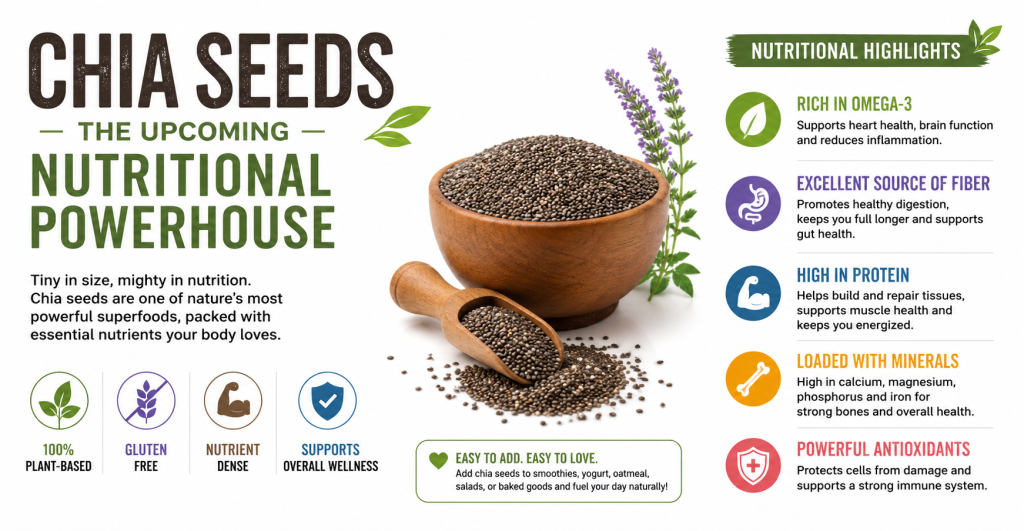

In the evolving landscape of functional foods and superfoods, chia seeds have steadily transitioned from a niche health ingredient to a globally recognized nutritional powerhouse. Derived from the plant Salvia hispanica, chia seeds are increasingly being integrated into everyday diets due to their dense nutrient profile, versatility, and scientifically supported health benefits. As consumers become more health-conscious and proactive about preventive nutrition, chia seeds are emerging as a staple in modern dietary patterns.
Nutritional Composition: Small Seeds, Massive Value
Despite their tiny size, chia seeds are packed with essential nutrients that support overall health and wellness. A typical serving (around 28 grams or two tablespoons) contains a remarkable balance of macronutrients and micronutrients.
Chia seeds are especially rich in:
- Omega-3 fatty acids (ALA): One of the richest plant-based sources
- Dietary fiber: Approximately 10–11 grams per serving
- Protein: Around 4–5 grams per serving
- Calcium, magnesium, and phosphorus
- Antioxidants
This combination makes chia seeds a highly efficient functional food, particularly for individuals seeking plant-based nutrition alternatives.
A Rising Star in the Functional Food Industry
Chia seeds are increasingly being classified as a “functional food,” meaning they provide benefits beyond basic nutrition. Unlike conventional grains or seeds, chia seeds actively contribute to metabolic health, digestive efficiency, and cardiovascular support.
In recent years, the global demand for superfoods has surged, driven by lifestyle diseases such as obesity, diabetes, and hypertension. Chia seeds have benefited from this shift due to their ability to support weight management, regulate blood sugar levels, and improve heart health.
Their popularity is also driven by their compatibility with multiple dietary preferences, including vegan, gluten-free, keto, and paleo diets.
Key Health Benefits Driving Popularity
1. Supports Digestive Health
One of the most notable benefits of chia seeds is their extremely high fiber content. When consumed, chia seeds absorb water and expand, forming a gel-like substance in the digestive tract. This helps:
- Improve bowel regularity
- Prevent constipation
- Support gut microbiome balance
The soluble fiber in chia seeds also slows digestion, which contributes to prolonged satiety.
2. Aids in Weight Management
Chia seeds are widely used in weight management diets due to their ability to increase fullness. When soaked, they expand up to 10–12 times their size, creating a feeling of satiety that reduces overall calorie intake.
Additionally, the combination of fiber, protein, and healthy fats helps stabilize hunger hormones, making chia seeds a strategic addition to weight loss programs.
3. Promotes Heart Health
The high concentration of omega-3 fatty acids (alpha-linolenic acid) in chia seeds supports cardiovascular health by:
- Reducing inflammation
- Lowering LDL cholesterol levels
- Improving arterial function
Regular consumption of chia seeds may contribute to reduced risk of heart disease when combined with a balanced diet.
4. Helps Regulate Blood Sugar Levels
Chia seeds slow down the conversion of carbohydrates into sugar, helping to stabilize blood glucose levels. This makes them particularly beneficial for individuals with insulin resistance or type 2 diabetes.
Studies suggest that incorporating chia seeds into meals can reduce post-meal blood sugar spikes, improving overall glycemic control.
5. Strengthens Bone Health
Chia seeds are an excellent plant-based source of calcium, magnesium, and phosphorus—key minerals required for bone density and strength. For individuals who avoid dairy, chia seeds serve as an important alternative source of bone-supporting nutrients.
Versatility in Modern Diets
One of the reasons chia seeds are rapidly gaining popularity is their adaptability. Unlike many superfoods that require specific preparation, chia seeds can be easily incorporated into daily meals without significantly altering taste.
Common uses include:
- Added to smoothies and protein shakes
- Mixed into yogurt or oatmeal
- Used in baking (muffins, bread, energy bars)
- Soaked to make chia pudding
- Used as an egg substitute in vegan recipes
Their neutral flavor and gel-forming ability make them a functional ingredient in both sweet and savory dishes.
Market Growth and Consumer Trends
The global chia seeds market has witnessed consistent growth over the past decade, driven by increasing awareness of plant-based nutrition and clean-label foods. North America and Europe remain major consumers, but Asia-Pacific regions are rapidly emerging as a key growth market.
Several factors are fueling this expansion:
- Rising vegan and vegetarian populations
- Increased demand for natural dietary supplements
- Growth of fitness and wellness culture
- Expansion of organic food retail channels
Food manufacturers are also incorporating chia seeds into packaged products such as cereals, energy bars, beverages, and nutritional supplements.
Sustainability and Agricultural Advantages
Chia seeds are not only nutritionally valuable but also environmentally sustainable. The chia plant requires relatively low water compared to other crops and can grow in diverse climates. This makes it an attractive crop in the context of global food security and sustainable agriculture.
As consumers become more environmentally conscious, foods like chia seeds that offer both health and ecological benefits are gaining additional appeal.
Potential Considerations and Moderation
While chia seeds are highly beneficial, they should be consumed in moderation. Excessive intake without adequate hydration may lead to digestive discomfort due to their high fiber content. Experts typically recommend 1–2 tablespoons per day as an optimal serving.
Individuals with medical conditions or those on specific medications should consult healthcare professionals before significantly increasing chia seed consumption.
The Future of Chia Seeds in Nutrition
Chia seeds are expected to play an increasingly important role in the future of nutrition science and functional foods. As research continues to explore their bioactive compounds, their application is likely to expand beyond food into nutraceuticals and personalized nutrition solutions.
With growing consumer interest in preventive healthcare, plant-based diets, and clean eating, chia seeds are positioned not just as a trend but as a long-term dietary staple.