
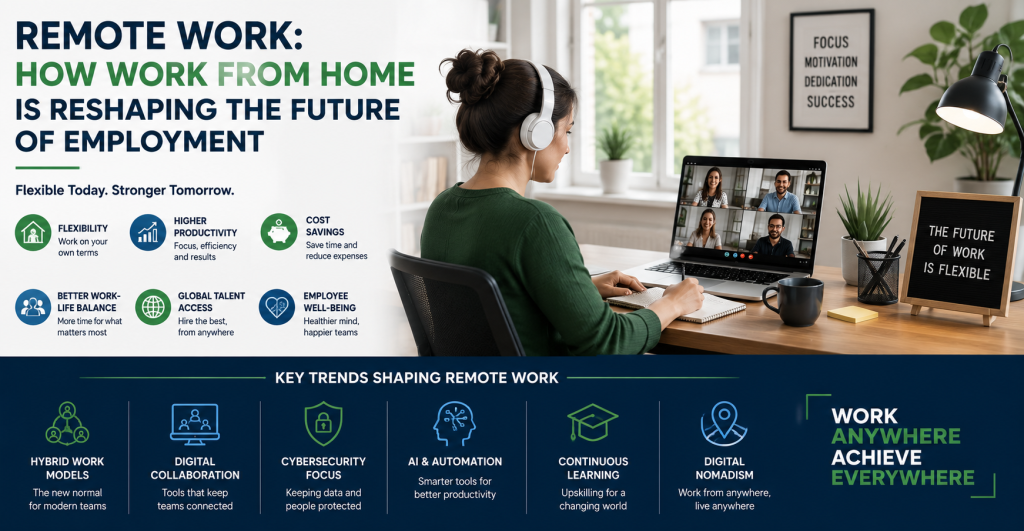

The way people work has undergone a dramatic transformation over the past few years. What was once considered a temporary solution has evolved into a long-term shift that is redefining workplaces around the world. Remote work, often referred to as work from home, has become a key trend influencing business operations, employee expectations, and organizational culture.
Advancements in digital technologies, cloud computing, and communication tools have made it possible for millions of professionals to perform their jobs from virtually anywhere. As companies continue to embrace flexibility, remote work is emerging as one of the most influential workplace trends of the decade.
The Rise of Flexible Work Culture
Traditional office environments are no longer the only option for businesses and employees. Organizations are increasingly adopting hybrid and remote-first models that provide greater flexibility and autonomy.
Employees value the ability to manage their schedules, reduce commuting time, and achieve a better work-life balance. Businesses, on the other hand, benefit from increased employee satisfaction and access to a broader talent pool.
This shift is changing how companies think about productivity, collaboration, and workplace design.
Technology Is Powering the Remote Work Revolution
Digital tools have become the backbone of remote work environments. Video conferencing platforms, cloud storage solutions, project management software, and collaboration applications enable teams to communicate efficiently regardless of location.
Artificial intelligence is also playing an increasingly important role. AI-powered assistants, automated workflows, and smart productivity tools are helping organizations streamline operations and enhance employee efficiency.
The growing adoption of these technologies is expected to further strengthen the remote work ecosystem in the coming years.
Hybrid Work Models Are Becoming the New Standard
Rather than choosing between fully remote and office-based operations, many organizations are embracing hybrid work models.
Hybrid workplaces allow employees to split their time between home and the office, combining flexibility with face-to-face collaboration. This approach provides businesses with the ability to maintain company culture while giving employees greater control over how and where they work.
As organizations continue to refine their workplace strategies, hybrid models are likely to remain a defining trend in the future of employment.
Global Talent Acquisition Is Expanding
Remote work has removed geographical barriers that once limited hiring opportunities. Companies can now recruit talent from different cities, countries, and regions without requiring relocation.
This global approach allows businesses to access specialized skills and build diverse teams. Employees also gain opportunities to work for organizations that may be located thousands of miles away.
As connectivity improves, the concept of a borderless workforce is becoming increasingly realistic.
Employee Well-Being Has Become a Priority
Remote work has encouraged organizations to place greater emphasis on employee wellness and mental health.
Flexible schedules, virtual wellness programs, and initiatives aimed at preventing burnout are becoming common practices. Businesses recognize that maintaining employee well-being contributes to higher productivity and stronger engagement.
Work-life balance is no longer viewed as an optional benefit but as an essential element of long-term organizational success.
Cybersecurity Challenges Continue to Grow
As remote work expands, cybersecurity has become a major concern for organizations worldwide.
Distributed workforces create new security risks that require businesses to invest in secure networks, multi-factor authentication, and employee awareness programs. Protecting sensitive information has become increasingly important as employees access corporate systems from multiple locations and devices.
Companies that prioritize cybersecurity are better positioned to maintain trust and safeguard critical business operations.
The Emergence of Digital Nomads
Remote work has also given rise to a new generation of professionals known as digital nomads.
These individuals combine work with travel, taking advantage of internet connectivity and cloud-based technologies to remain productive while exploring different locations. Several countries have introduced digital nomad visa programs to attract remote workers and support local economies.
This lifestyle trend highlights how work is becoming more flexible and location-independent than ever before.
Continuous Learning Is Becoming Essential
The rapid pace of technological advancement means employees must continuously develop new skills to remain competitive.
Online courses, virtual workshops, and digital learning platforms are making professional development more accessible. Organizations are investing in training programs to help employees adapt to changing technologies and workplace requirements.
Lifelong learning is becoming a fundamental part of the future workforce.
What Lies Ahead for Remote Work?
Remote work is no longer a temporary trend—it represents a significant evolution in how businesses operate and how employees define their careers.
Emerging technologies such as artificial intelligence, virtual reality, and advanced collaboration platforms are expected to further enhance remote work experiences. Organizations that embrace flexibility and innovation will likely gain a competitive advantage in attracting talent and improving productivity.
As the future of work continues to evolve, remote work is set to remain a powerful force shaping industries, economies, and lifestyles around the world.
Conclusion
Remote work has transformed from an emergency response into a lasting workplace trend. Driven by technological innovation, changing employee expectations, and the demand for flexibility, work-from-home models are redefining the future of employment.
As businesses continue to adapt and invest in digital solutions, remote work is expected to become an integral part of modern professional life, creating new opportunities for both organizations and employees in an increasingly connected world.