
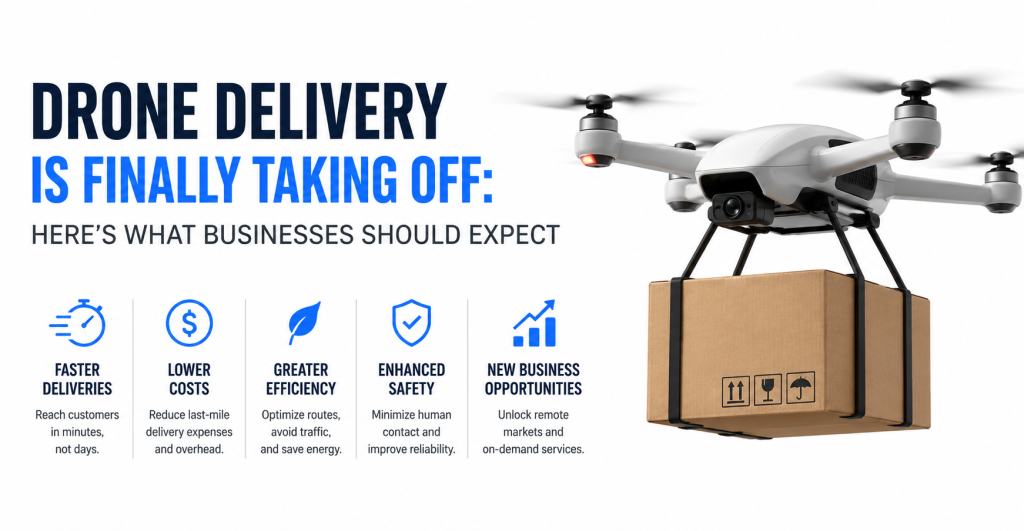

The idea of receiving a package delivered by a flying drone once sounded like science fiction. Today, that vision is quickly becoming reality. Around the world, companies are testing and expanding drone delivery services, making deliveries faster, smarter, and more efficient than ever before.
From online retailers and healthcare providers to food delivery platforms and logistics companies, businesses are exploring how drones can transform last-mile delivery. As technology improves and government regulations continue to evolve, drone delivery is expected to become a major part of the global supply chain.
For businesses, this isn’t just another technology trend—it’s a potential competitive advantage. Companies that understand and prepare for this shift could benefit from lower delivery costs, faster service, and improved customer satisfaction.
Why Drone Delivery Is Gaining Momentum
Several factors are driving the rapid growth of drone delivery.
Consumers now expect faster deliveries than ever before. Same-day and even one-hour delivery services have become increasingly common, putting pressure on logistics providers to find more efficient solutions. At the same time, drone technology has improved significantly. Modern drones are equipped with GPS navigation, obstacle detection, artificial intelligence, and real-time tracking, making autonomous deliveries safer and more reliable. Governments in many countries are also updating aviation regulations, allowing companies to conduct commercial drone operations in selected regions. These developments are creating new opportunities for businesses across multiple industries.
How Drone Delivery Works
Drone delivery systems are designed to transport lightweight packages directly from a warehouse, fulfillment center, or retail store to the customer’s location. After an order is placed, the package is securely attached to the drone. Using advanced navigation software and sensors, the drone follows a pre-planned route while avoiding obstacles and monitoring weather conditions. Once it reaches the destination, the package is either gently lowered to the ground or placed at a designated delivery point before the drone returns to its base. Although the technology continues to evolve, many pilot programs have already demonstrated that drone deliveries can significantly reduce delivery times for short-distance orders.
Industries That Will Benefit the Most
Drone delivery has the potential to reshape several industries.
1. E-Commerce
Online shopping continues to grow worldwide, and customers increasingly expect faster deliveries. Drones can help retailers shorten delivery times while reducing dependence on traditional delivery vehicles.
This could improve customer satisfaction while lowering transportation costs for businesses.
2. Healthcare
One of the most valuable applications of drone delivery is in healthcare.
Hospitals and pharmacies can use drones to transport medicines, vaccines, blood samples, and emergency medical supplies, especially to rural or hard-to-reach areas where traditional transportation may take hours.
Faster deliveries can directly improve patient care during emergencies.
3. Food and Grocery Delivery
Restaurants and grocery stores are experimenting with drone delivery to provide fresh food in less time.
Instead of waiting for a delivery driver to navigate traffic, customers may receive their orders within minutes.
This speed could become a major selling point for businesses competing in crowded food delivery markets.
4. Logistics and Supply Chain
Logistics companies can use drones for inventory movement between warehouses, urgent package deliveries, and remote site transportation.
By automating part of the delivery process, businesses can improve operational efficiency while reducing labor costs.
Key Benefits for Businesses
Faster Deliveries
Perhaps the biggest advantage of drone delivery is speed.
Since drones travel through the air instead of busy roads, they can often complete short-distance deliveries much faster than traditional vehicles.
Lower Operating Costs
Although initial investments can be significant, drone delivery has the potential to reduce long-term transportation expenses.
Businesses may spend less on fuel, vehicle maintenance, and delivery personnel for specific delivery routes.
Improved Customer Experience
Customers value convenience and quick service.
Offering drone delivery can help businesses stand out in competitive markets while creating a modern and innovative brand image.
Environmental Benefits
Electric drones generally produce fewer emissions than fuel-powered delivery vehicles.
As companies work toward sustainability goals, drone delivery may help reduce their environmental impact while improving delivery efficiency.
Challenges Businesses Should Consider
Despite its exciting potential, drone delivery still faces several obstacles.
Regulatory Approval
Every country has different aviation rules governing commercial drone operations.
Businesses must comply with licensing requirements, flight restrictions, and safety regulations before launching drone delivery services.
Weather Conditions
Heavy rain, strong winds, thunderstorms, and poor visibility can affect drone performance.
Unlike traditional delivery vehicles, drones cannot safely operate in every weather condition.
Limited Payload Capacity
Most commercial delivery drones are designed for lightweight packages.
Large appliances, furniture, and heavy products will continue to require traditional transportation methods.
Security and Privacy
Drone operators must protect customer data while ensuring deliveries remain secure.
Businesses also need systems to prevent theft, unauthorized access, and cyberattacks targeting autonomous delivery networks.
Emerging Technologies Driving Drone Delivery
The future of drone delivery will depend on several advanced technologies. Artificial intelligence is helping drones make real-time navigation decisions and optimize delivery routes. Machine learning improves flight safety by analyzing environmental conditions. 5G connectivity enables faster communication between drones and control systems. Meanwhile, battery technology continues to improve, allowing drones to travel longer distances and carry heavier payloads than previous generations. These innovations are making commercial drone delivery increasingly practical for businesses.
What This Means for Businesses
Drone delivery is not expected to replace traditional logistics overnight. Instead, it will complement existing delivery networks by handling urgent, lightweight, and short-distance deliveries more efficiently. Businesses that begin testing drone solutions today will gain valuable operational experience before the technology becomes widely adopted. Retailers, healthcare providers, logistics companies, restaurants, and e-commerce businesses should closely monitor developments in drone regulations and autonomous delivery technology. Early adoption could provide significant advantages as customer expectations continue to evolve.
Looking Ahead
Industry experts believe the next decade will bring major advances in autonomous delivery systems. Improved batteries, smarter navigation software, expanded regulatory approval, and lower equipment costs will likely accelerate commercial adoption. Future drone fleets may operate alongside self-driving delivery vehicles, robotic warehouses, and AI-powered logistics platforms to create faster, more connected supply chains. For businesses, drone delivery represents more than an innovative shipping method—it signals a broader transformation in how goods move from seller to customer.
Conclusion
Drone delivery is finally moving beyond experimental trials and becoming a practical business solution. While challenges such as regulations, weather limitations, and infrastructure remain, the technology is advancing rapidly. Businesses that embrace drone delivery strategically can improve efficiency, reduce operational costs, and offer faster services that meet modern customer expectations. As autonomous logistics continues to evolve, drone delivery is poised to become an essential part of the future supply chain. Companies that prepare today may be the ones leading tomorrow’s delivery revolution.