

For years, gaming was often dismissed as a hobby that distracted people from “real” careers. Parents worried about excessive screen time, teachers encouraged students to focus elsewhere, and many people believed that video games would never become anything more than entertainment.
Fast forward to 2026, and that perception has changed dramatically.
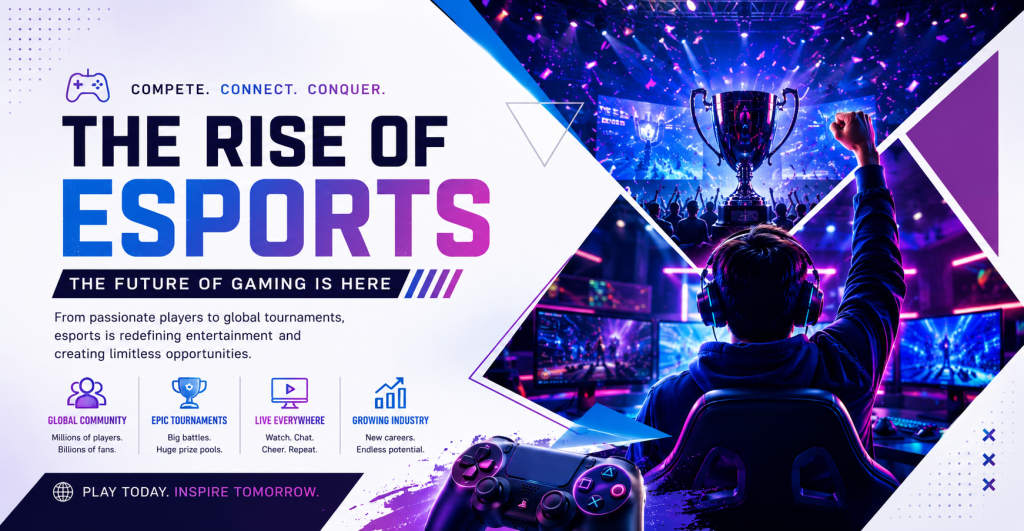
Today, esports fills stadiums, attracts millions of online viewers, generates billions of dollars in revenue, and creates careers that didn’t even exist a decade ago. Professional gamers sign sponsorship deals, content creators build businesses around gaming communities, and major brands compete for visibility in one of the fastest-growing digital industries in the world.
What was once considered a pastime has become a serious business.
The Moment Gaming Became a Global Spectator Sport
Think about traditional sports for a moment.
People gather to watch football, cricket, basketball, and other competitions because they enjoy the excitement, strategy, and emotional connection. Esports taps into those same feelings.
The difference is that the competition takes place in a digital arena.
Millions of fans now tune in to watch professional gamers compete in titles such as Valorant, Counter-Strike 2, League of Legends, Dota 2, and PUBG Mobile. Championship events attract global audiences, while social media discussions around major tournaments often trend alongside traditional sporting events.
For younger generations especially, watching esports is becoming as normal as watching cricket or football.
Why Esports Is Growing Faster Than Many Traditional Industries
One of the biggest reasons behind esports’ success is accessibility.
You don’t need an expensive ticket to attend a stadium. You don’t even need a television subscription.
Anyone with a smartphone and an internet connection can watch professional gaming competitions from anywhere in the world.
This accessibility has allowed esports to build a truly global audience.
Countries such as India, Brazil, Indonesia, Saudi Arabia, and the Philippines are experiencing significant growth in gaming participation. Millions of young people are discovering esports through mobile gaming, creating a much larger audience than many traditional sports can reach.
At the same time, gaming has become deeply integrated into everyday life. Whether it’s a quick mobile match during a commute or watching a favorite streamer after work, gaming is no longer a niche activity.
It’s part of modern culture.
The Rise of the Gaming Creator
One of the most interesting trends in esports isn’t happening inside tournaments.
It’s happening on streaming platforms.
Ten years ago, becoming famous through gaming seemed almost impossible. Today, creators are building massive audiences simply by sharing gameplay, reactions, tutorials, and live streams.
Some gaming influencers attract millions of followers and earn revenue through advertisements, sponsorships, subscriptions, merchandise, and brand partnerships.
In many cases, creators earn more than professional players.
This shift has transformed esports from a competition-focused industry into a creator-driven economy where personality and community can be just as valuable as skill.
Artificial Intelligence Is Entering the Arena
Another trend shaping esports in 2026 is artificial intelligence.
AI is changing how teams train, how games are managed, and even how fans consume content.
Professional organizations now use advanced analytics tools to study player behavior, identify weaknesses, and improve team performance.
Game developers rely on AI to detect cheating, balance gameplay, and create better user experiences.
Meanwhile, viewers benefit from AI-generated highlights, real-time statistics, and personalized recommendations that make esports content easier to discover and enjoy.
The relationship between AI and esports is still in its early stages, but it has the potential to redefine competitive gaming over the next decade.
Why Brands Are Investing Millions in Esports
Follow the money, and you’ll quickly understand why esports is attracting so much attention.
Major companies aren’t investing because gaming is trendy. They’re investing because that’s where the audience is.
The average esports fan is digitally connected, highly engaged, and comfortable interacting with brands online.
For marketers, this audience is incredibly valuable.
Technology companies, automotive brands, financial institutions, energy drink manufacturers, and fashion companies are all increasing their presence within esports.
Many organizations now view esports sponsorships as an essential part of their marketing strategy rather than an experimental investment.
India’s Esports Story Is Just Beginning
India deserves special attention in the global esports conversation.
With one of the world’s youngest populations and hundreds of millions of smartphone users, the country has become a major growth market for gaming.
Mobile esports has been particularly successful because it removes many of the barriers traditionally associated with gaming.
Today, talented players from small towns can compete with opponents from around the world using nothing more than a smartphone and a stable internet connection.
Indian gaming creators are also building enormous audiences, proving that the country has the potential to become a global leader in esports and gaming content.
Beyond Players: The Careers Nobody Talks About
When people think about esports careers, they usually imagine professional players.
But the industry is creating opportunities far beyond the gaming chair.
Every major esports organization needs marketers, designers, analysts, event managers, broadcasters, social media specialists, developers, video editors, and business professionals.
In fact, many of the fastest-growing roles in esports have little to do with playing games at all.
As the industry expands, the demand for skilled professionals behind the scenes will continue to increase.
Challenges Still Exist
Despite its growth, esports isn’t without obstacles.
Player burnout remains a serious concern. Professional competitors often spend long hours practicing and traveling, which can affect both physical and mental health.
The industry also faces challenges related to regulation, cybersecurity, and long-term monetization.
However, these challenges are common in rapidly growing industries and are unlikely to slow the overall momentum of esports.
Looking Ahead
The future of esports extends far beyond gaming.
As technologies such as AI, cloud gaming, virtual reality, and 5G become more advanced, competitive gaming will become even more immersive and accessible.
The next generation may not view esports as an alternative to traditional sports. They may simply view it as another form of sport altogether.
Final Thoughts
The story of esports is really a story about how entertainment is evolving.
What started as a hobby has become a global industry that connects players, creators, businesses, and fans across continents.
In 2026, esports is no longer just about winning tournaments. It’s about building communities, creating careers, driving innovation, and shaping the future of digital entertainment.
And if current trends continue, the biggest chapters of the esports story may still be ahead of us.