
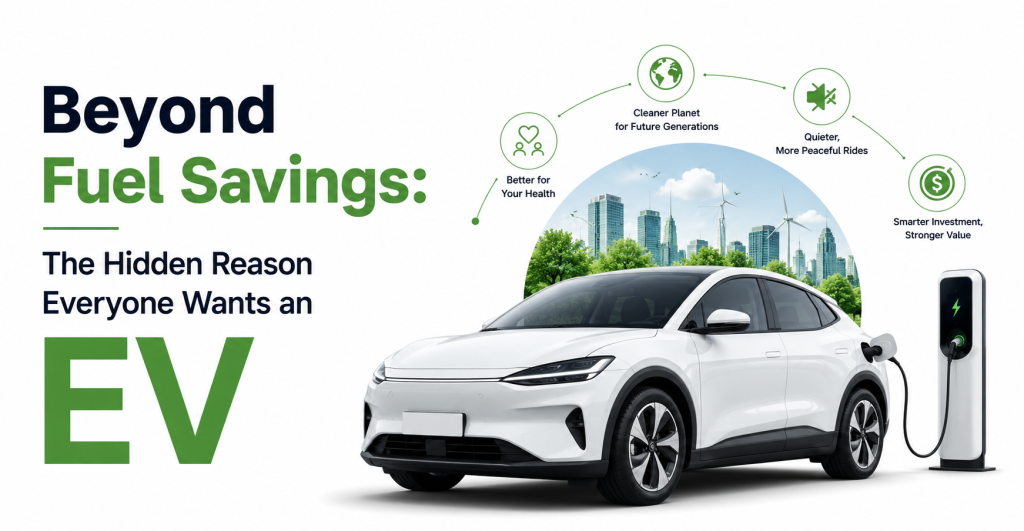

The Hidden Reason Why Everyone Wants an Electric Car
Electric cars are no longer just an environmentally friendly alternative to gasoline-powered vehicles; they are rapidly becoming the symbol of modern mobility. The real reason behind the growing demand is not simply rising fuel prices or government incentives. It is the convergence of technology, economics, consumer psychology, and changing lifestyles that is making electric vehicles (EVs) increasingly desirable.
People are not buying electric cars solely because they produce fewer emissions. They are choosing them because EVs represent a smarter, quieter, and more connected driving experience. As charging infrastructure expands, battery technology improves, and ownership costs decline, electric cars are shifting from being a niche product to becoming the default choice for millions of consumers worldwide.
Why Consumers Find Electric Cars More Appealing
The hidden reason everyone wants an electric car lies in the way these vehicles align with modern consumer expectations. Today’s buyers value convenience, efficiency, and technology more than ever before. Electric cars combine all three into one product.
Unlike conventional vehicles, EVs offer instant torque, smoother acceleration, quieter cabins, and significantly fewer moving parts. This creates a driving experience that feels effortless from the very first trip.
The appeal extends beyond performance. Electric vehicles reduce many of the everyday inconveniences associated with traditional cars. Owners can charge their vehicles overnight at home instead of making regular trips to fuel stations. Software updates can introduce new features without visiting a dealership, making the car feel continuously upgraded.
In many ways, electric cars resemble smartphones more than traditional automobiles—they improve over time through software rather than remaining mechanically unchanged.
Technology Is Becoming the Biggest Selling Point
The second hidden reason behind the electric vehicle boom is technological advancement.
Modern EVs are packed with intelligent features that appeal to digital-first consumers. Large touchscreen displays, AI-powered navigation, connected ecosystems, voice assistants, predictive maintenance, and autonomous driving capabilities are transforming the driving experience.
Consumers increasingly associate innovation with electric vehicles rather than gasoline cars. Major automakers are investing billions into software development, battery research, and artificial intelligence because future competition is shifting away from engines and toward digital experiences.
This technological edge makes EVs particularly attractive to younger buyers who already expect seamless integration between their phones, homes, and vehicles.
The result is that purchasing an electric car feels less like buying transportation and more like investing in future technology.
Why Running Costs Matter More Than Purchase Price
One of the biggest misconceptions is that people buy electric vehicles simply to save the environment.
For many buyers, the stronger motivation is long-term financial value.
Although electric vehicles often carry higher upfront prices, they typically cost much less to operate. Electricity is generally cheaper than gasoline on a per-kilometer basis, while maintenance expenses are considerably lower because electric motors have far fewer components than internal combustion engines.
There are no oil changes, fewer mechanical failures, reduced brake wear through regenerative braking, and fewer routine service requirements.
As consumers become more aware of total ownership costs rather than just sticker prices, EVs increasingly appear to be the smarter financial investment.
This shift in consumer thinking is helping accelerate global adoption.
Why Governments Keep Supporting Electric Cars
Governments around the world view electric vehicles as a critical component of long-term transportation policy.
Many countries have introduced tax incentives, purchase subsidies, charging infrastructure investments, and stricter emissions regulations to encourage EV adoption.
Cities are also creating low-emission zones where electric vehicles receive preferential access or reduced fees.
These policies reduce the financial barriers for consumers while signaling that electric transportation represents the future of mobility.
When buyers see governments, automakers, and infrastructure providers investing heavily in EV ecosystems, confidence in the technology continues to grow.
Charging Infrastructure Is Removing Consumer Anxiety
For years, charging availability remained one of the biggest concerns for potential EV buyers.
That challenge is gradually disappearing.
Fast-charging networks are expanding across highways, urban centers, shopping malls, workplaces, and residential communities. New battery technologies continue reducing charging times while increasing driving range.
Many modern electric vehicles now comfortably exceed 400–600 kilometers on a single charge, making them practical for everyday commuting and even long-distance travel.
As charging becomes easier and more accessible, range anxiety is giving way to convenience.
Consumers are beginning to see charging as a routine activity rather than a limitation.
Why Brands Are Racing Toward Electrification
Automakers are no longer treating electric vehicles as experimental projects.
They are becoming the center of future business strategy.
Nearly every major automotive manufacturer is investing heavily in dedicated EV platforms, battery production facilities, software ecosystems, and autonomous technologies.
Luxury brands are launching premium electric models while mass-market manufacturers are introducing increasingly affordable options.
Competition is accelerating innovation, leading to improved performance, better design, longer battery life, and lower manufacturing costs.
This competitive environment ultimately benefits consumers by expanding choice and making electric mobility accessible across multiple price segments.
The Real Growth Engines Behind the EV Revolution
Several structural forces are driving long-term growth simultaneously.
First, battery technology continues improving rapidly, delivering greater energy density, longer lifespan, and lower production costs.
Second, renewable energy adoption complements electric transportation, creating cleaner charging ecosystems.
Third, urbanization increases demand for quieter, cleaner, and more efficient mobility solutions.
Artificial intelligence, connected vehicles, smart cities, and autonomous driving technologies also integrate naturally with electric vehicle platforms.
Perhaps the strongest growth driver is changing consumer expectations.
People increasingly view sustainability as a desirable feature rather than a compromise. Buying an electric car allows consumers to align personal values with technological innovation without sacrificing comfort or performance.
This combination creates powerful momentum that extends far beyond environmental concerns.
What Happens Next
The next phase of electric vehicle growth will likely focus less on convincing people to switch and more on improving ownership experiences.
Battery swapping, ultra-fast charging, vehicle-to-grid technology, wireless charging, AI-powered energy management, and autonomous mobility services are expected to reshape transportation over the coming decade.
Manufacturers will increasingly compete through software, digital services, subscription features, and connected ecosystems rather than horsepower alone.
Electric vehicles may eventually become the foundation of intelligent transportation networks where cars communicate with infrastructure, homes, and energy grids in real time.
In that future, owning an EV will represent participation in a broader digital ecosystem rather than simply driving a different kind of car.
Risks That Could Slow Adoption
Despite impressive progress, several challenges remain.
Battery raw material supply chains continue facing geopolitical uncertainty. Charging infrastructure still varies significantly across regions, particularly in developing economies.
Affordability also remains an obstacle for many consumers despite falling battery costs.
There are additional concerns surrounding battery recycling, electricity grid capacity, and long-term sustainability of large-scale EV manufacturing.
However, these challenges primarily affect the pace of adoption rather than the overall direction of the industry.
Most experts expect continued investment, technological innovation, and economies of scale to address many of these issues over time.
Final Thoughts
The hidden reason everyone wants an electric car is not just lower emissions or cheaper fuel—it is the complete transformation of what people expect from personal transportation. Electric vehicles deliver a combination of advanced technology, lower operating costs, smoother performance, intelligent connectivity, and long-term value that traditional cars increasingly struggle to match.
As battery innovation accelerates, charging networks expand, and software becomes central to the driving experience, electric cars are evolving into more than an alternative powertrain. They are becoming the new standard for mobility. The future of transportation is no longer defined solely by how vehicles move; it is defined by how seamlessly they integrate into people’s digital lives. That is why the electric vehicle revolution continues to gain momentum and why demand is likely to keep growing for years to come.