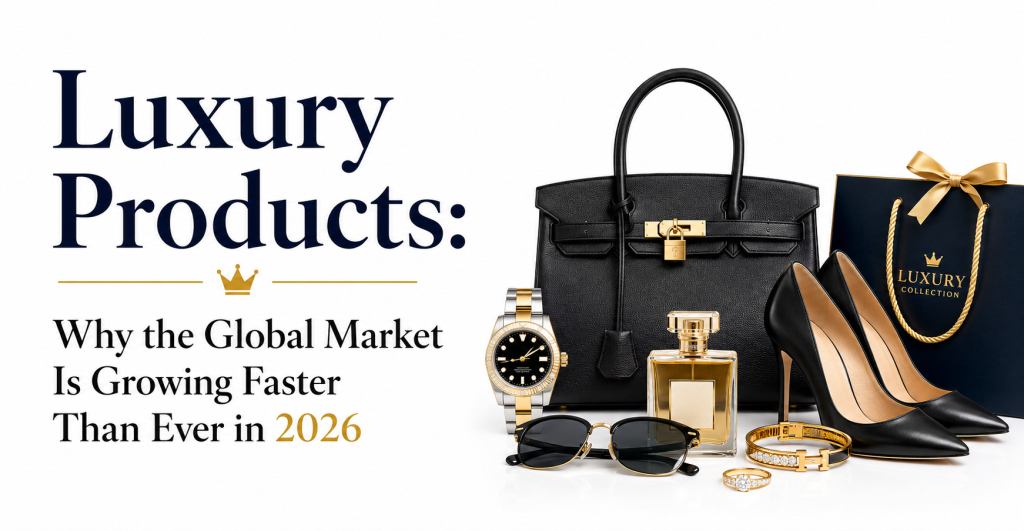

Luxury products are no longer limited to celebrities or ultra-high-net-worth individuals. Over the past few years, changing consumer behavior, digital shopping, and rising disposable income have transformed the luxury industry. Today, premium fashion, luxury watches, designer handbags, high-end beauty products, luxury automobiles, and exclusive travel experiences are attracting a much broader audience. Instead of buying luxury only for status, modern consumers see premium products as symbols of quality, craftsmanship, long-term value, and personal identity. This shift has made the luxury products market one of the fastest-growing segments in global retail.
The Evolution of Luxury Products
Luxury products have evolved significantly from their traditional image of exclusivity. In earlier decades, premium brands relied heavily on limited physical stores and exclusive customer experiences. While exclusivity remains an important part of luxury branding, companies have adapted their business models to meet the expectations of digitally connected consumers. Today’s luxury market is built around experience as much as the product itself. Consumers expect personalized recommendations, premium customer service, seamless online shopping, fast delivery, and post-purchase support. Brands that successfully combine traditional craftsmanship with modern technology are gaining a competitive advantage in the global marketplace.
Another noticeable shift is the growing emphasis on emotional value. Consumers increasingly purchase luxury products because they reflect personal identity, achievement, confidence, and lifestyle rather than simply serving as expensive possessions. This emotional connection has strengthened customer loyalty and encouraged repeat purchases across multiple luxury categories.
Technology Is Changing Luxury Shopping
Technology has become one of the strongest growth engines for the luxury products market. Artificial intelligence, virtual reality, augmented reality, and data-driven personalization have fundamentally changed how premium brands interact with customers. Luxury shoppers can now virtually try on fashion accessories, receive personalized product recommendations, and enjoy immersive online shopping experiences that closely replicate physical boutiques.
Examples include:
- Artificial intelligence for personalized recommendations
- Virtual try-on experiences
- Augmented reality shopping
- Online luxury consultations
- Digital authentication for premium products
Sustainability Has Become a Competitive Advantage
Sustainability has emerged as one of the defining trends in the luxury products industry. Modern consumers expect premium brands to demonstrate environmental responsibility alongside exceptional quality. As a result, many luxury companies are adopting ethical sourcing practices, reducing carbon emissions, introducing recycled materials, and improving supply chain transparency.
This shift reflects changing consumer priorities rather than temporary marketing strategies. Buyers increasingly prefer brands that align with their personal values while continuing to deliver superior craftsmanship and timeless design. Luxury companies that successfully balance exclusivity with sustainability are likely to strengthen their market position in the years ahead.
Conclusion
The luxury products market continues to expand because consumer expectations have evolved beyond traditional definitions of prestige. Quality, craftsmanship, innovation, sustainability, personalization, and emotional value now influence purchasing decisions as much as brand recognition. As technology continues to reshape retail and younger consumers become the primary drivers of luxury spending, the industry is expected to experience sustained long-term growth. Businesses that invest in authentic customer experiences and responsible innovation will be better positioned to succeed in this highly competitive global market.