
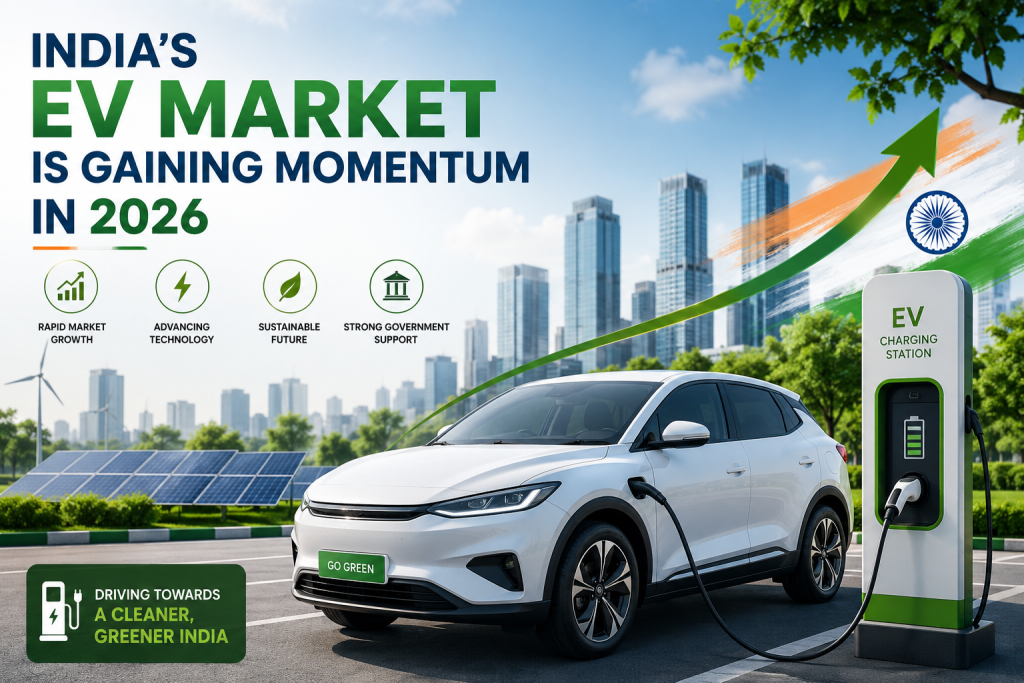

India’s electric vehicle (EV) market is entering a new phase of rapid growth in 2026. Once considered a niche segment, EVs are now becoming a mainstream transportation choice for individuals, businesses, and public transport operators. Rising fuel prices, increasing environmental awareness, government incentives, and advancements in battery technology have all contributed to this remarkable transformation.
As India moves toward a cleaner and more sustainable future, the EV ecosystem is expanding at an unprecedented pace. From electric two-wheelers dominating urban roads to the growing popularity of electric cars and commercial vehicles, the industry is witnessing significant investment and innovation.
Strong Government Support Driving Growth
One of the biggest reasons behind India’s EV momentum is consistent government support. Central and state governments continue to introduce policies that encourage EV adoption through purchase incentives, reduced registration fees, tax benefits, and investments in charging infrastructure.
Manufacturing initiatives aimed at promoting domestic battery production and reducing import dependency are strengthening the country’s EV supply chain. These efforts are making electric vehicles more affordable while creating employment opportunities across manufacturing, technology, and infrastructure sectors.
Expanding Charging Infrastructure
Charging availability has long been a concern for potential EV buyers. However, 2026 is witnessing a significant expansion of public and private charging networks across cities, highways, shopping malls, office complexes, and residential communities.
Fast-charging stations are becoming increasingly common, reducing charging times and improving convenience for daily commuters and long-distance travelers. Private companies, energy providers, and automotive manufacturers are collaborating to establish reliable charging ecosystems throughout the country.
Falling Battery Costs
Battery technology continues to improve, making electric vehicles more accessible to consumers. The cost of lithium-ion batteries has declined steadily over the past few years, allowing manufacturers to introduce competitively priced EV models across different market segments.
Modern batteries also offer improved driving range, faster charging capabilities, longer life cycles, and enhanced safety features. These improvements have significantly reduced consumer concerns about battery performance and ownership costs.
Rising Consumer Awareness
Indian consumers are becoming increasingly conscious of environmental issues and long-term fuel savings. With petrol and diesel prices remaining relatively high, many buyers now view EVs as an economically sensible investment.
Lower maintenance requirements, reduced operating costs, and smoother driving experiences make electric vehicles particularly attractive for daily commuting. Younger buyers are also embracing EVs as symbols of innovation and sustainability.
Growth of Electric Two-Wheelers
Electric scooters and motorcycles continue to dominate India’s EV market. Two-wheelers remain the preferred mode of transportation for millions of Indians, making electrification in this segment especially impactful.
Manufacturers are introducing affordable models with improved range, smart connectivity features, removable batteries, and faster charging options. Increased competition has resulted in better product quality and more choices for consumers.
Commercial Fleet Electrification
Businesses are increasingly adopting electric vehicles for logistics, delivery services, ride-hailing platforms, and public transportation. Fleet operators recognize that EVs offer lower operating expenses and reduced maintenance costs compared to conventional vehicles.
Electric buses are also becoming more common in major Indian cities, helping reduce urban air pollution while lowering fuel expenditures for municipal transport authorities.
Domestic Manufacturing Expansion
India is rapidly developing into an important EV manufacturing hub. Major automobile companies, startups, battery manufacturers, and component suppliers are investing heavily in production facilities.
Local manufacturing reduces dependence on imports while improving supply chain resilience. It also enables companies to develop products specifically designed for Indian road conditions and consumer preferences.
Innovation and Startup Ecosystem
India’s startup ecosystem is playing a crucial role in accelerating EV adoption. Innovative companies are developing battery-swapping solutions, charging technologies, fleet management software, energy storage systems, and smart mobility platforms.
Artificial intelligence, connected vehicle technologies, and digital payment integration are further enhancing the EV ownership experience, making electric mobility more convenient than ever before.
Challenges Still Remain
Despite impressive progress, several challenges continue to influence the market. Rural charging infrastructure requires further expansion, battery recycling systems need greater development, and raw material availability remains an important consideration.
However, ongoing investments, technological advancements, and supportive policies indicate that these challenges are gradually being addressed.
Looking Ahead
India’s electric vehicle market in 2026 represents more than just a shift in transportation—it reflects a broader transformation toward sustainable mobility and energy independence. With strong policy support, expanding infrastructure, affordable technology, and increasing consumer confidence, the industry is well-positioned for sustained long-term growth.
As automakers continue launching innovative products and infrastructure expands across the country, electric vehicles are expected to become an integral part of India’s transportation landscape. The momentum seen in 2026 marks the beginning of a new era where cleaner, smarter, and more efficient mobility becomes the norm rather than the exception.