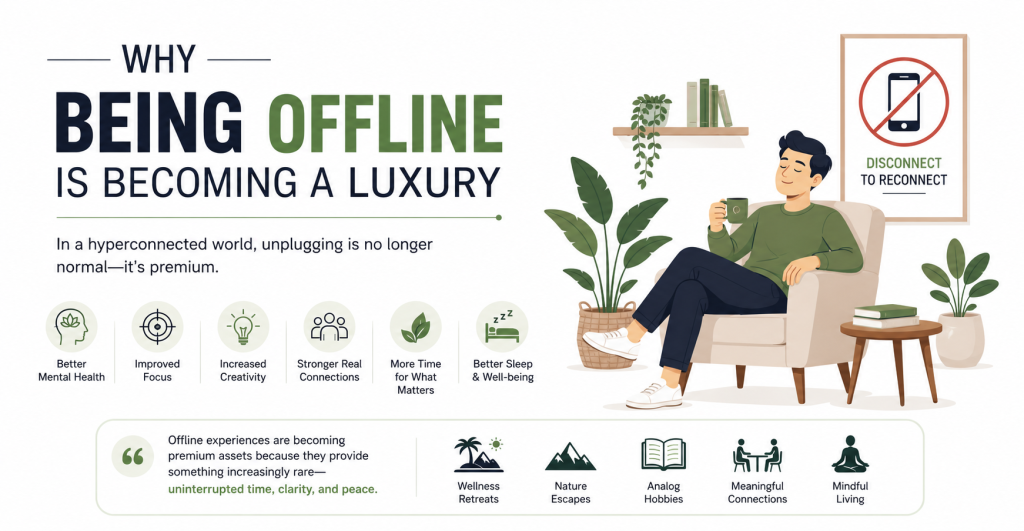

In today’s hyperconnected world, being online has become the default mode of living. Smartphones, cloud platforms, social media, artificial intelligence, and remote work tools have made continuous connectivity an expectation rather than a choice. While these technologies have improved communication and productivity, they have also created an environment where people are constantly available. As a result, uninterrupted offline time is becoming increasingly valuable, making Why Being Offline Is Becoming a Luxury a growing discussion across business, technology, and lifestyle sectors.
The demand for digital disconnection is no longer limited to personal wellness. Businesses, hospitality providers, employers, and product developers are recognizing that consumers are actively seeking opportunities to step away from screens. This shift is creating new markets centered on digital wellness, offline experiences, and mindful living.
The Rise of the Attention Economy
Over the last decade, digital platforms have competed for one valuable resource—human attention. Notifications, personalized content, streaming services, and instant messaging keep users engaged throughout the day. While this constant flow of information increases convenience, it also contributes to mental fatigue, reduced focus, and information overload.
As digital engagement continues to grow, uninterrupted personal time has become increasingly scarce. Like any limited resource, scarcity creates value. Today, spending a few hours without emails, social media, or work notifications is viewed as a luxury for many professionals. This changing perception is influencing consumer behavior and encouraging businesses to develop products and services that support healthier digital habits.
Consumer Preferences Are Changing
Modern consumers are not rejecting technology; instead, they are seeking greater control over how they use it. More people are scheduling screen-free hours, limiting notifications, and choosing activities that encourage mindfulness and real-world interaction. Families are becoming more conscious of children’s screen exposure, while professionals are looking for ways to improve focus and reduce digital distractions.
This behavioral shift has fueled demand for outdoor recreation, printed books, creative hobbies, wellness retreats, and technology-free travel experiences. Rather than viewing offline time as inconvenient, consumers increasingly see it as an investment in mental health, creativity, and work-life balance.
The trend reflects a broader understanding that productivity and well-being depend on periods of uninterrupted concentration rather than constant digital engagement.
Businesses Are Creating New Opportunities
Companies across industries are responding to this changing demand. Hotels and resorts now offer digital detox packages where guests are encouraged to disconnect from devices and reconnect with nature. Employers are introducing meeting-free workdays, focus hours, and wellness initiatives designed to reduce digital fatigue.
Retailers, restaurants, and entertainment venues are also emphasizing physical experiences that cannot be replicated online. Customers increasingly value authentic interactions, immersive environments, and meaningful experiences over endless digital engagement.
The growing popularity of these offerings demonstrates that offline experiences are becoming an attractive business opportunity. Organizations capable of combining digital convenience with opportunities for intentional disconnection are likely to strengthen customer loyalty and create long-term competitive advantages.
Technology Is Supporting Healthier Digital Habits
Interestingly, technology companies themselves are promoting digital balance. Screen-time monitoring, focus modes, notification controls, and sleep management tools have become common features across smartphones and operating systems. Artificial intelligence is also beginning to simplify digital interactions by automating repetitive tasks and helping users prioritize important information instead of increasing distractions.
This evolution reflects a significant change in product design. Future innovation is expected to focus not only on connecting users but also on helping them disconnect when necessary. Companies that respect consumer attention are likely to build stronger trust and long-lasting relationships.
Offline Living Is Becoming a Premium Lifestyle
Luxury has traditionally been associated with exclusive products and expensive possessions. Today, however, many consumers define luxury differently. Privacy, quiet environments, meaningful experiences, and uninterrupted personal time are becoming more desirable than constant digital access.
High-end travel destinations, wellness resorts, remote cabins, and nature retreats are attracting visitors seeking freedom from digital interruptions. Real estate developers are also incorporating green spaces, meditation areas, and wellness-focused communities into premium residential projects.
This transformation shows that consumers are increasingly willing to invest in experiences that improve emotional well-being rather than simply providing more technology.
Future Outlook
As artificial intelligence, automation, and connected devices continue to expand, digital engagement will become even more integrated into everyday life. Ironically, this will likely increase the value of offline experiences. Businesses operating in wellness, experiential travel, outdoor recreation, education, and digital wellness technologies are expected to benefit from this long-term trend.
Why Being Offline Is Becoming a Luxury is more than a lifestyle conversation—it represents an emerging shift in consumer priorities. The future will not belong to organizations that simply increase connectivity, but to those that create a healthy balance between digital convenience and meaningful offline experiences. In a world where attention is constantly demanded, the ability to disconnect may become one of the most valuable assets of modern living.