

As cyber threats continue to evolve, traditional passwords are increasingly becoming one of the weakest links in digital security. Weak passwords, credential reuse, phishing attacks, and data breaches have pushed organizations to rethink how users access online services. This shift has given rise to passwordless authentication, one of the fastest-growing cybersecurity trends worldwide.
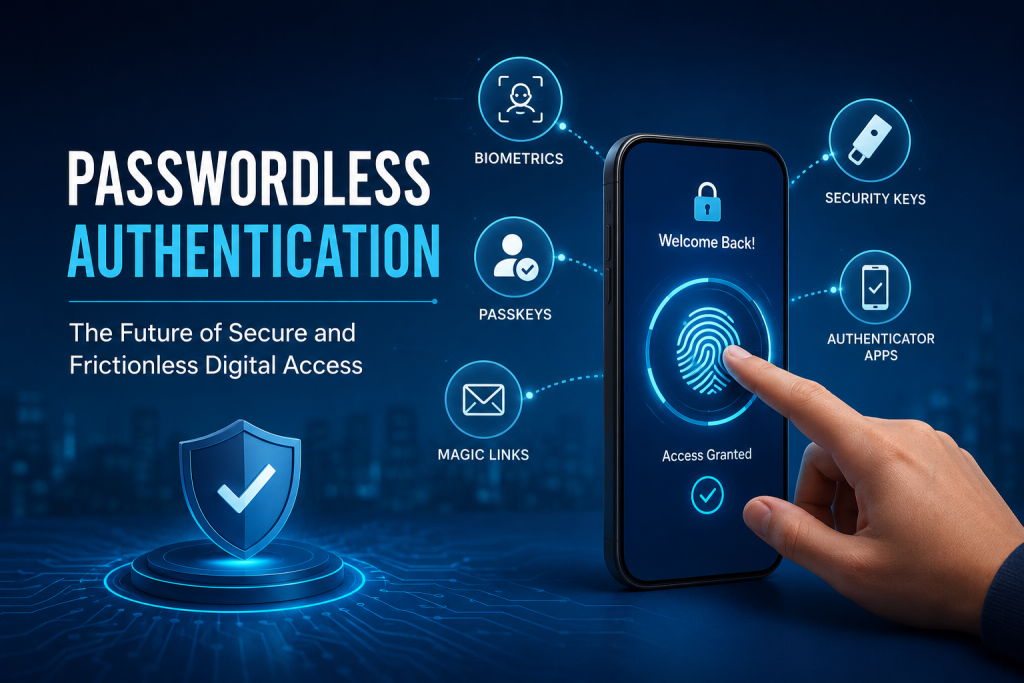
Passwordless authentication replaces conventional passwords with more secure verification methods such as biometrics, passkeys, hardware security keys, authentication apps, and one-time login links. The approach not only strengthens security but also creates a faster and more convenient user experience.
From financial institutions and healthcare providers to e-commerce platforms and cloud services, businesses across industries are embracing passwordless authentication to improve security while reducing login friction. As digital transformation accelerates, passwordless authentication is becoming a key pillar of modern identity and access management.
What Is Passwordless Authentication?
Passwordless authentication is a method of verifying a user’s identity without requiring them to enter a traditional password. Instead, users authenticate themselves using something they possess (such as a trusted device), something they are (such as a fingerprint or facial recognition), or cryptographic credentials like passkeys.
Common passwordless authentication methods include:
- Biometric authentication (fingerprint or facial recognition)
- Passkeys based on FIDO standards
- Hardware security keys
- Authentication applications
- Magic links delivered via email
- One-time verification codes
Unlike traditional passwords, these methods significantly reduce the risk of phishing attacks, password theft, and credential stuffing while making the login experience faster and easier.
Why Passwordless Authentication Is Trending
The growing popularity of passwordless authentication is driven by several important factors.
Rising Cybersecurity Threats
Cybercriminals increasingly target passwords through phishing, malware, brute-force attacks, and leaked credentials. Organizations are moving toward authentication methods that eliminate these vulnerabilities and provide stronger identity verification.
Better User Experience
Users manage dozens—sometimes hundreds—of online accounts. Remembering complex passwords often leads to password reuse or frequent reset requests. Passwordless authentication simplifies access by allowing users to log in with a fingerprint, face scan, or trusted device.
Growth of Remote and Hybrid Work
Organizations supporting remote employees require secure access to cloud applications from multiple devices and locations. Passwordless authentication aligns well with Zero Trust security strategies by reducing identity-based risks while improving accessibility.
Industry Support for Passkeys
Major technology companies including operating system providers, browser developers, and cloud platforms are actively supporting passkeys based on FIDO standards. This growing ecosystem is accelerating enterprise and consumer adoption.
Key Technologies Driving Passwordless Authentication
Several technologies are shaping the future of passwordless security.
Passkeys are quickly becoming the preferred authentication method because they use cryptographic keys that are resistant to phishing attacks.
Biometric authentication allows users to verify their identity using fingerprints, facial recognition, or iris scanning.
Hardware security keys provide enterprise-grade protection by requiring physical possession of a secure authentication device.
Authentication apps generate secure login approvals without exposing passwords.
Magic links allow users to securely log in through time-limited email links.
Together, these technologies create stronger protection while improving convenience for both consumers and businesses.
Industries Adopting Passwordless Authentication
Passwordless authentication is gaining momentum across multiple industries.
Banking and Financial Services
Financial institutions are strengthening customer security while simplifying digital banking experiences through biometric authentication and passkeys.
Healthcare
Hospitals and healthcare providers are protecting sensitive patient information while enabling healthcare professionals to securely access electronic medical records.
Retail and E-commerce
Online retailers are reducing account takeover attacks while improving customer checkout experiences.
Government Services
Public agencies are modernizing citizen identity verification through secure digital authentication methods.
Enterprise IT
Businesses are replacing traditional passwords with passwordless access to cloud applications, VPNs, and corporate networks.
Benefits of Passwordless Authentication
Organizations adopting passwordless authentication gain numerous advantages:
- Stronger protection against phishing attacks
- Reduced password-related data breaches
- Faster login experiences
- Lower IT support costs from password resets
- Improved regulatory compliance
- Better employee productivity
- Enhanced customer satisfaction
- Stronger identity verification
These benefits make passwordless authentication an attractive investment for organizations seeking both security and usability.
Challenges to Adoption
Despite its advantages, passwordless authentication still faces several challenges.
Legacy systems often depend on traditional username-and-password combinations, making migration complex.
Organizations must also educate users about new authentication methods and establish reliable account recovery processes in case users lose their devices.
Additionally, integrating passwordless solutions across large enterprises requires careful planning and investment.
However, as authentication standards continue to mature, these barriers are gradually becoming easier to overcome.
Future Outlook
Passwordless authentication is expected to become the default authentication model for many digital services over the coming years. Growing adoption of passkeys, biometric verification, and hardware-based authentication will further reduce reliance on traditional passwords.
Artificial intelligence will also play a growing role by helping detect suspicious login behavior, enabling adaptive authentication, and strengthening identity verification without adding friction for legitimate users.
As cybersecurity regulations become more stringent and cyberattacks continue to increase, organizations are likely to accelerate investments in passwordless identity solutions.
Conclusion
Passwordless authentication represents one of the most significant advancements in digital security. By replacing vulnerable passwords with modern authentication methods, organizations can reduce cyber risks while delivering a faster and more convenient user experience.
As businesses continue their digital transformation journeys, passwordless authentication is moving beyond an emerging technology to become a foundational component of secure digital identity. With broader adoption of passkeys, biometrics, and hardware-backed authentication, the future of online access is becoming both more secure and more user-friendly.