
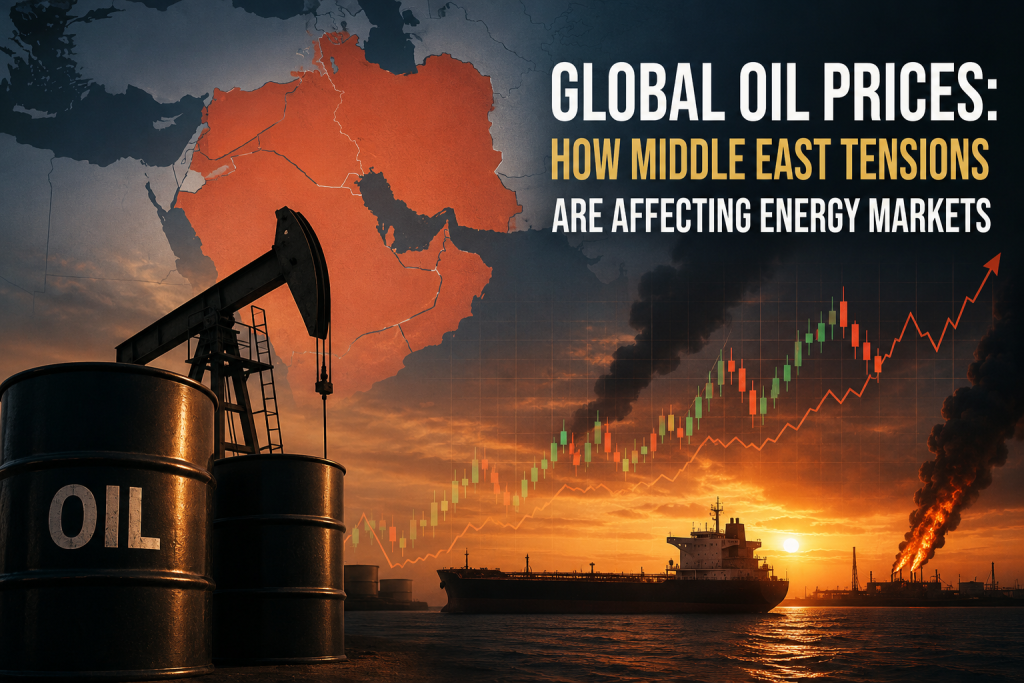

Global oil prices have once again become one of the biggest concerns for governments, businesses, and consumers as geopolitical tensions in the Middle East continue to escalate. The region supplies nearly one-third of the world’s crude oil and controls critical shipping routes, making it a key pillar of global energy security. Even the possibility of supply disruptions is enough to trigger sharp movements in crude oil prices, impacting everything from fuel costs to inflation and financial markets.
Recent developments have highlighted how closely interconnected the global economy has become with energy markets. Investors, policymakers, and businesses are closely monitoring the situation, as prolonged instability could reshape energy trade flows, influence inflation, and accelerate investments in alternative energy sources.
Why the Middle East Matters to Global Oil Markets
The Middle East accounts for a significant share of global crude oil production and exports. Countries such as Saudi Arabia, Iraq, the United Arab Emirates, Kuwait, Iran, and Qatar play an essential role in maintaining global energy supplies.
One of the most strategically important locations is the Strait of Hormuz, a narrow shipping passage connecting the Persian Gulf to international markets. Around one-fifth of the world’s seaborne oil passes through this route, making it one of the world’s most critical energy chokepoints. Any disruption to shipping activity can immediately create uncertainty in energy markets and increase oil prices.
Rising Geopolitical Risks Drive Oil Price Volatility
Oil prices are influenced not only by actual supply shortages but also by market expectations. Whenever military conflicts, sanctions, or attacks on energy infrastructure occur in the Middle East, traders often anticipate potential disruptions and bid prices higher.
Recent tensions involving regional conflicts have increased concerns over:
- Damage to oil production facilities
- Disruptions in tanker movements
- Higher shipping and insurance costs
- Potential export restrictions
- Supply chain uncertainties
As a result, Brent crude prices have experienced significant fluctuations as investors evaluate the likelihood of prolonged disruptions.
The Ripple Effect Across Global Energy Markets
Higher crude oil prices affect much more than fuel stations. Since oil remains a primary input for transportation, manufacturing, aviation, logistics, and petrochemicals, rising prices quickly spread throughout the economy.
Some of the major impacts include:
Higher Fuel Prices
Consumers often experience increased prices for petrol and diesel as refiners pass on higher crude costs.
Rising Inflation
Transportation costs influence the prices of food, consumer goods, and industrial products, contributing to broader inflationary pressures.
Increased Manufacturing Costs
Industries relying on plastics, chemicals, fertilizers, and petroleum-based products face higher production expenses.
Airline and Shipping Challenges
Airlines and logistics companies see operating costs increase significantly due to expensive aviation fuel and marine fuels.
Energy Companies May Benefit
While higher oil prices create economic challenges for consumers, they often improve profitability for oil and gas producers.
Large integrated energy companies generally benefit from:
- Higher upstream revenues
- Improved profit margins
- Stronger cash flows
- Increased shareholder returns
Analysts expect many global energy firms to report stronger earnings during periods of sustained higher crude prices, provided production remains stable.
Impact on Stock Markets
Energy market volatility often spills over into financial markets.
Investors typically respond by:
- Moving toward defensive sectors
- Increasing investments in energy stocks
- Reducing exposure to industries sensitive to fuel costs
- Monitoring inflation expectations and interest-rate outlooks
Sectors such as airlines, automobiles, transportation, and manufacturing often face increased pressure, while oil producers and energy service companies may outperform broader markets.
What It Means for Emerging Economies
Countries heavily dependent on imported crude oil are generally more vulnerable during periods of rising oil prices.
For many emerging economies, higher energy prices can lead to:
- Larger import bills
- Currency pressure
- Rising inflation
- Higher fiscal deficits
- Slower economic growth
India, China, Japan, and several Southeast Asian economies closely monitor Middle East developments because a significant portion of their crude imports originates from the region.
How Governments Are Responding
Governments and international agencies are taking several steps to reduce market volatility and ensure adequate energy supplies.
Common measures include:
- Strategic petroleum reserve releases
- Increased domestic production
- Supply diversification
- Diplomatic efforts to stabilize the region
- Investment in renewable energy and energy efficiency
Organizations such as the International Energy Agency (IEA) continue to monitor supply conditions and coordinate responses when necessary.
Renewables Gain Momentum
Periods of elevated oil prices often strengthen the business case for renewable energy.
Higher fossil fuel costs encourage investment in:
- Solar power
- Wind energy
- Green hydrogen
- Electric vehicles
- Battery storage
- Energy-efficient technologies
While oil remains essential to the global economy, long-term price volatility reinforces the importance of diversifying energy sources and improving energy security.
What Investors Should Watch
Several indicators will determine the direction of oil prices in the coming months:
- Geopolitical developments in the Middle East
- Shipping activity through the Strait of Hormuz
- OPEC+ production decisions
- Global oil demand
- Inflation trends
- Central bank interest-rate policies
- Strategic reserve announcements
Market participants are expected to remain highly sensitive to geopolitical headlines, making oil one of the most closely watched commodities in the global financial system.
Outlook
The current geopolitical landscape demonstrates that energy markets remain deeply connected to global political developments. Even limited disruptions in the Middle East can create significant ripple effects across oil prices, inflation, financial markets, and economic growth.
Although global energy supplies remain resilient, continued geopolitical uncertainty is likely to keep oil markets volatile. Businesses, investors, and policymakers will need to balance short-term market risks with long-term strategies focused on energy diversification, supply chain resilience, and the transition toward cleaner energy sources.