
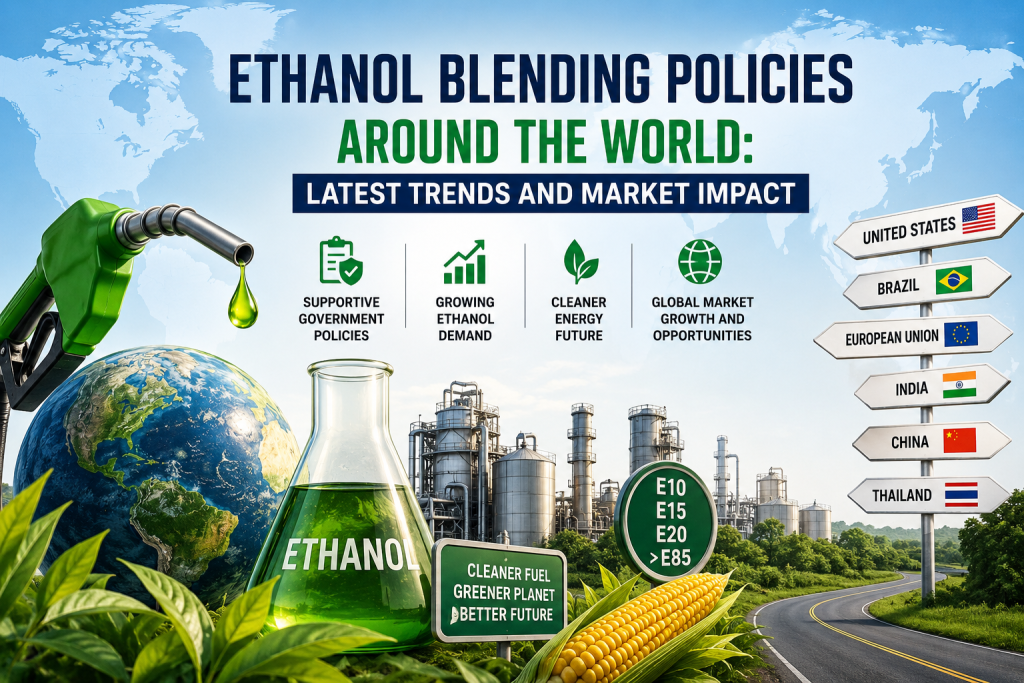

As countries work to reduce greenhouse gas emissions, improve energy security, and decrease dependence on fossil fuels, ethanol blending has become a key component of national fuel strategies. Governments across the globe are expanding ethanol blending mandates to support cleaner transportation while creating new opportunities for the agricultural and renewable energy sectors. These policies are reshaping fuel markets, encouraging investment in biofuel production, and accelerating the transition toward more sustainable energy systems.
Understanding Ethanol Blending
Ethanol blending refers to mixing ethanol, a renewable biofuel produced primarily from crops such as corn, sugarcane, and agricultural residues, with gasoline. Common fuel blends include E10, which contains 10% ethanol, and E20, which contains 20% ethanol. Some regions also promote higher blends such as E85 for vehicles specifically designed to use flexible fuel technology.
The primary objective of ethanol blending is to reduce carbon emissions from transportation while improving fuel efficiency and supporting domestic agricultural industries. Since ethanol burns cleaner than conventional gasoline, it helps lower emissions of harmful pollutants and contributes to cleaner air.
Global Momentum Behind Ethanol Blending Policies
Many governments are strengthening ethanol blending requirements as part of broader climate and energy initiatives. Rising fuel demand, concerns over energy security, and commitments to carbon reduction are driving the adoption of renewable fuels.
Several countries have introduced long-term roadmaps to increase ethanol content in transportation fuels. These policies often include blending mandates, financial incentives for producers, tax benefits, infrastructure investments, and research support for advanced biofuels. Together, these measures create a favorable environment for expanding ethanol production and consumption.
Regional Policy Developments
North America
North America remains one of the world’s largest ethanol-producing regions. Ethanol plays an important role in transportation fuel, supported by renewable fuel standards and established blending infrastructure. Continuous investments in production technologies and distribution networks have helped maintain strong demand for ethanol while encouraging innovation in low-carbon fuel solutions.
South America
South America has long recognized ethanol as an important renewable energy source. Countries with abundant sugarcane resources have successfully integrated ethanol into their transportation sectors. Flexible fuel vehicles and widespread availability of higher ethanol blends have demonstrated how supportive policies can encourage consumer adoption while reducing reliance on imported petroleum.
Europe
European countries are expanding the use of renewable fuels to meet ambitious climate goals. Ethanol blending is increasingly viewed as part of a broader strategy that includes electric mobility, sustainable aviation fuel, and renewable energy development. Regulatory frameworks continue to evolve, promoting advanced biofuels produced from agricultural waste and non-food biomass.
Asia-Pacific
The Asia-Pacific region is experiencing rapid growth in ethanol blending initiatives. Several governments are increasing blending targets to reduce oil imports, strengthen rural economies, and lower transportation emissions. Investments in ethanol production facilities, feedstock development, and supply chain infrastructure are supporting long-term market expansion across the region.
Emerging Trends in Ethanol Blending
One of the most significant trends is the development of second-generation (2G) ethanol. Unlike conventional ethanol produced from food crops, advanced ethanol utilizes agricultural residues, forestry waste, and other biomass resources. This technology improves sustainability while addressing concerns related to food security.
Digital technologies are also transforming ethanol production. Automation, artificial intelligence, and advanced monitoring systems are helping producers improve operational efficiency, reduce production costs, and optimize energy consumption.
Another emerging trend is the integration of carbon capture technologies within ethanol production facilities. Capturing and utilizing carbon dioxide emissions can significantly reduce the overall carbon footprint of biofuel manufacturing, making ethanol an even more attractive renewable fuel option.
Market Impact of Ethanol Blending Policies
Government mandates have created strong demand for ethanol, encouraging investments throughout the value chain. New production facilities, storage infrastructure, transportation networks, and research initiatives are expanding rapidly as countries pursue renewable energy goals.
The agricultural sector also benefits from ethanol demand. Farmers gain additional market opportunities for feedstocks such as corn and sugarcane, while rural communities benefit from increased employment and infrastructure development. This economic impact extends beyond agriculture, supporting industries involved in engineering, logistics, equipment manufacturing, and renewable energy technologies.
Automotive manufacturers are adapting to evolving fuel standards by developing vehicles capable of operating efficiently with higher ethanol blends. This compatibility strengthens consumer confidence and supports broader adoption of renewable fuels.
Challenges Ahead
Despite significant progress, ethanol blending policies face several challenges. Feedstock availability can fluctuate due to changing weather conditions and agricultural productivity. Infrastructure upgrades are necessary in many regions to accommodate higher ethanol blends, and differences in regulatory standards can create complexities for international fuel markets.
Balancing food production with biofuel demand also remains an important consideration. Continued investment in advanced ethanol technologies and sustainable feedstocks will be essential for addressing these concerns while maintaining environmental benefits.
Looking Ahead
Ethanol blending policies are expected to remain a cornerstone of global clean energy strategies. As governments strengthen climate commitments and prioritize energy independence, renewable fuels will continue to play an increasingly important role in transportation.
Advances in production technologies, expanded use of agricultural waste, improved fuel infrastructure, and supportive government policies are likely to drive the next phase of ethanol adoption. While electric vehicles continue to grow in popularity, ethanol provides an immediate and practical solution for reducing emissions from existing internal combustion engines.
In the years ahead, ethanol blending will continue to contribute to cleaner transportation, stronger rural economies, and a more diversified global energy landscape. Through ongoing innovation and policy support, ethanol is well positioned to remain a vital component of the world’s transition toward a more sustainable and resilient energy future.