
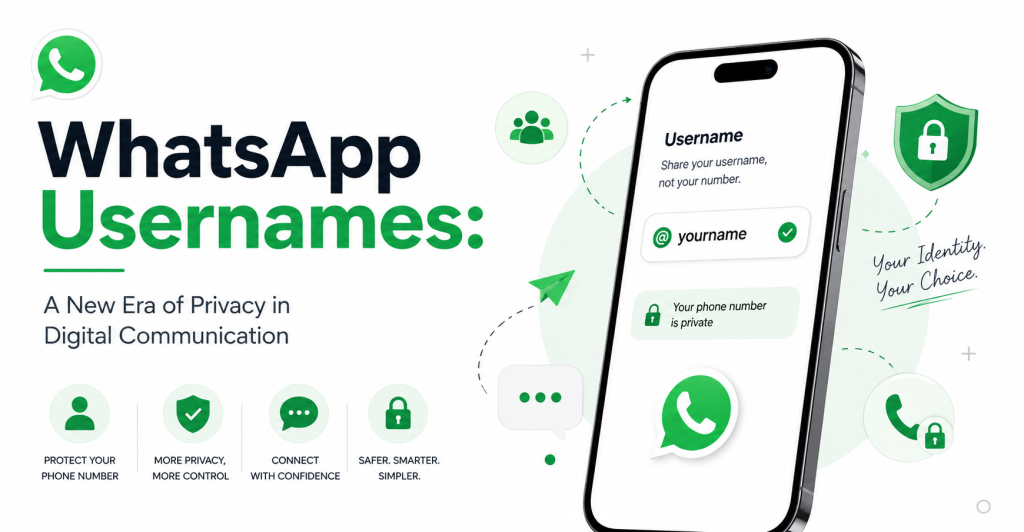

For years, WhatsApp has been one of the most personal apps on our smartphones. It’s where we celebrate birthdays, share family moments, discuss work projects, and stay connected with people across the world. Yet every conversation on the platform has always started with one thing your phone number.
That simple requirement has been part of WhatsApp since its launch. If someone wanted to contact you, they needed your mobile number. While this worked well for friends and family, it wasn’t always ideal for business conversations, online communities, or interactions with people you had just met.
Now, WhatsApp is taking a major step toward changing that experience.
The introduction of WhatsApp usernames marks a significant shift in how people can connect on the platform. Instead of sharing a personal phone number, users will be able to identify themselves with a unique username. It may sound like a small feature, but it reflects a much bigger change in the way digital privacy is evolving.
More Than Just a New Feature
At first glance, usernames might seem like another routine app update. However, they represent something much more meaningful.
Over the past few years, people have become increasingly aware of how much personal information they share online. Phone numbers are no longer just contact details they’re often linked to banking apps, two-factor authentication, social media accounts, and countless online services.
Sharing your number with someone you barely know can sometimes feel uncomfortable. Whether you’re buying something from an online marketplace, joining a community group, networking at an event, or speaking with a potential client, giving away your personal number isn’t always necessary.
A username changes that experience.
Instead of exposing your mobile number from the very beginning, you can simply share a username and start a conversation. It adds a valuable layer of privacy while making communication feel more convenient and secure.
Why This Matters Right Now
The timing of this update couldn’t be better.
Privacy has become one of the biggest priorities for internet users. Every day, people receive spam calls, promotional messages, phishing attempts, and unwanted contact from unknown numbers. As digital communication grows, users are looking for better ways to control who can reach them and what personal information they share.
WhatsApp usernames align perfectly with this shift.
Rather than forcing users to reveal their personal number, the platform is moving toward an identity system that feels more modern and flexible. It’s a simple change, but one that gives users greater control over their online presence.
A Better Experience for Everyday Users
For regular users, the biggest benefit is peace of mind.
Imagine joining a hobby group, attending a networking event, or selling a product online. Previously, the easiest way to continue the conversation was by sharing your phone number. While that worked, it also meant exposing personal information that you might have preferred to keep private.
With usernames, that process becomes much simpler.
You can connect with new people without immediately revealing your personal contact details. Conversations become easier to start while maintaining a healthier level of privacy.
It’s a small improvement that could make millions of users feel more comfortable using the platform.
A Big Opportunity for Businesses and Creators
The introduction of usernames isn’t only good news for individual users it could also reshape how businesses communicate on WhatsApp.
Small business owners, freelancers, consultants, creators, and online sellers often use WhatsApp to interact with customers. Until now, that usually meant displaying a personal or business phone number across websites, social media profiles, or advertisements.
A professional username creates a cleaner and more recognizable identity.
Instead of asking customers to save a phone number, businesses can simply share an easy-to-remember username that reflects their brand.
This could improve customer trust, simplify communication, and make WhatsApp feel even more like a professional business platform.
For creators and influencers, usernames also strengthen personal branding by creating a consistent digital identity across multiple platforms.
Privacy Still Requires Smart Choices
Although usernames offer greater privacy, they don’t eliminate every online risk.
Like any digital identity, usernames could become targets for impersonation, fake profiles, or spam if users aren’t careful. Popular names may attract copycats, while scammers could attempt to create similar usernames to mislead others.
That means users should treat their username as an important part of their online identity.
Choosing a unique name, enabling two-factor authentication, and remaining cautious about suspicious messages will continue to be essential.
Technology can improve privacy, but responsible digital habits remain equally important.
A Reflection of Changing Digital Habits
WhatsApp’s move toward usernames reflects a broader shift happening across the digital world.
People increasingly want more control over their online identities. They want to decide what information they share, who can contact them, and how they appear across different platforms.
Many modern apps already rely on usernames rather than phone numbers as the primary way users connect. By introducing this feature, WhatsApp is adapting to changing expectations while making the platform feel more flexible and privacy-focused.
Rather than simply following a trend, the company is responding to how digital communication continues to evolve.
What This Means for the Future
The arrival of usernames could change the way millions of people use WhatsApp every day.
Students may feel more comfortable joining study groups. Freelancers can communicate with new clients without sharing personal numbers immediately. Small businesses may create stronger brand identities, while everyday users gain greater confidence when interacting with new contacts.
Over time, phone numbers may become something users share only when necessary rather than the starting point for every conversation.
That represents a meaningful shift in how messaging platforms balance convenience with privacy.
Final Thoughts
The introduction of WhatsApp usernames may appear to be a simple feature update, but it signals a much larger change in digital communication.
As users become more aware of online privacy, they expect messaging platforms to offer greater flexibility and stronger control over personal information. Usernames are a step in that direction, making it easier to connect with new people while keeping sensitive details private.
While the feature won’t solve every privacy challenge, it reflects an important evolution in how messaging apps are adapting to changing user expectations.
Sometimes, the biggest innovations aren’t the ones that completely transform an app they’re the ones that quietly make everyday communication safer, simpler, and more comfortable.
WhatsApp usernames have the potential to do exactly that, making this one of the platform’s most meaningful privacy updates in recent years.