
Introduction
The automotive industry is undergoing a major transformation as vehicles evolve from traditional transportation machines into intelligent, connected platforms. Connected Vehicle Technology is becoming one of the most influential developments shaping modern mobility by enabling vehicles to communicate with drivers, infrastructure, cloud platforms, and other vehicles. This advanced technology is creating new possibilities in safety, convenience, vehicle management, and personalized driving experiences while helping manufacturers and mobility providers build smarter transportation ecosystems.
Unlike conventional vehicles, connected vehicles use advanced communication systems, sensors, software platforms, and wireless networks to exchange real-time information. These capabilities are changing how people interact with transportation and opening new opportunities for automakers, technology providers, mobility companies, and service developers.
The Rise of Smart and Connected Mobility
The growing demand for smarter transportation solutions is accelerating the adoption of connected vehicle technologies. Consumers are increasingly expecting vehicles to offer digital features similar to smartphones, including seamless connectivity, navigation support, remote access, and personalized services.
Modern vehicles are becoming highly integrated ecosystems where hardware and software work together. Features such as real-time traffic updates, vehicle diagnostics, over-the-air software updates, and voice-based controls are improving the overall driving experience. This evolution is shifting the automotive industry from a product-focused approach toward a service-driven mobility model.
Connected vehicle technology is also supporting the development of smarter cities. Vehicles equipped with communication capabilities can interact with traffic systems, road infrastructure, and public transportation networks to improve efficiency and reduce congestion.
Key Trends Driving Connected Vehicle Development
1. Advanced Vehicle-to-Everything (V2X) Communication
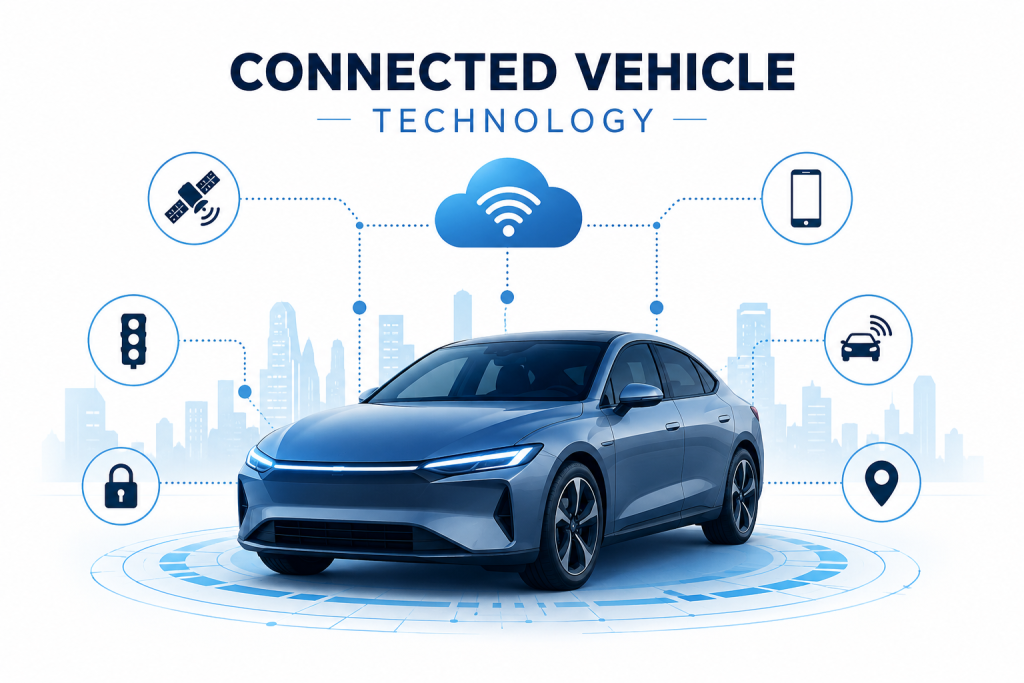
One of the most important trends in connected mobility is Vehicle-to-Everything (V2X) communication. This technology allows vehicles to exchange information with other vehicles, pedestrians, traffic signals, and road infrastructure.
V2X systems can help improve road safety by providing alerts about potential hazards, sudden braking events, road conditions, or approaching emergency vehicles. As transportation networks become more connected, this technology is expected to play a significant role in creating safer and more efficient mobility environments.
2. Integration of Artificial Intelligence and Data Analytics
Artificial intelligence is becoming a core component of connected vehicles. AI-powered systems analyze large amounts of data collected from sensors and vehicle systems to deliver smarter decisions and improved performance.
AI applications include predictive maintenance, intelligent navigation, driver behavior analysis, and personalized in-car experiences. By identifying patterns and predicting potential issues, connected vehicles can help reduce unexpected failures and improve vehicle reliability.
Data analytics is also enabling manufacturers to better understand customer preferences and develop services tailored to individual driving habits.
3. Growth of Cloud-Based Vehicle Platforms
Cloud technology is playing a crucial role in connected vehicle ecosystems. Vehicles continuously generate data related to performance, location, usage patterns, and driver preferences. Cloud platforms allow this information to be processed, stored, and used to deliver advanced services.
Cloud-based systems enable remote vehicle monitoring, digital service management, fleet optimization, and seamless software improvements. Automakers are increasingly focusing on software-driven vehicle platforms where new features can be introduced through digital updates instead of traditional hardware changes.
4. Expansion of Electric and Autonomous Mobility
The growth of electric vehicles and autonomous driving technologies is closely linked with connected vehicle development. Electric vehicles rely heavily on digital systems for battery monitoring, charging management, and energy optimization.
Connected technology helps EV users locate charging stations, monitor battery conditions remotely, and manage charging schedules. Similarly, autonomous vehicles depend on constant communication between sensors, software, and external systems to navigate safely.
As mobility becomes more automated and electrified, connectivity will become an essential foundation for future transportation solutions.
Benefits of Connected Vehicle Technology
Connected vehicles provide several advantages for drivers, businesses, and transportation systems.
For drivers, connectivity improves convenience through features such as remote vehicle control, digital navigation, entertainment integration, and personalized settings. Drivers can access important vehicle information through mobile applications and receive notifications about maintenance requirements or security alerts.
For businesses, connected technology enables better fleet management. Companies can track vehicle performance, optimize routes, reduce operational costs, and improve driver safety. Logistics and transportation industries are increasingly using connected solutions to improve productivity and efficiency.
From a broader perspective, connected mobility can support safer roads and more sustainable transportation systems. Better communication between vehicles and infrastructure can help reduce traffic problems and improve resource management.
Challenges and Future Considerations
Despite significant advancements, connected vehicle technology faces several challenges. Data security and privacy remain major concerns as vehicles collect and exchange large amounts of information. Protecting connected systems from cyber threats is becoming a priority for manufacturers and technology providers.
Another challenge is ensuring compatibility between different vehicle platforms, communication networks, and infrastructure systems. Industry collaboration will be important to create standardized solutions that support widespread connectivity.
Additionally, the increasing complexity of software-driven vehicles requires continuous innovation in cybersecurity, artificial intelligence, and digital infrastructure.
Future Outlook
The future of connected vehicle technology is expected to be shaped by deeper integration between vehicles, digital platforms, and smart infrastructure. Vehicles are likely to become more than transportation tools—they will function as intelligent mobility hubs capable of delivering personalized services and real-time decision-making.
Future developments may include enhanced autonomous capabilities, improved road communication systems, advanced AI assistants, and stronger integration with smart city networks. As connectivity continues to expand, vehicles will become increasingly interactive, efficient, and adaptable.
Conclusion
Connected vehicle technology is redefining the automotive landscape by combining mobility with digital intelligence. Through advanced communication, AI, cloud platforms, and real-time data exchange, connected vehicles are creating a more efficient and personalized transportation experience.
As industries continue investing in smarter mobility solutions, connectivity will remain a key force driving innovation across the automotive sector. The transition toward connected transportation represents not only a technological shift but also a new approach to how people and vehicles interact in the future.