
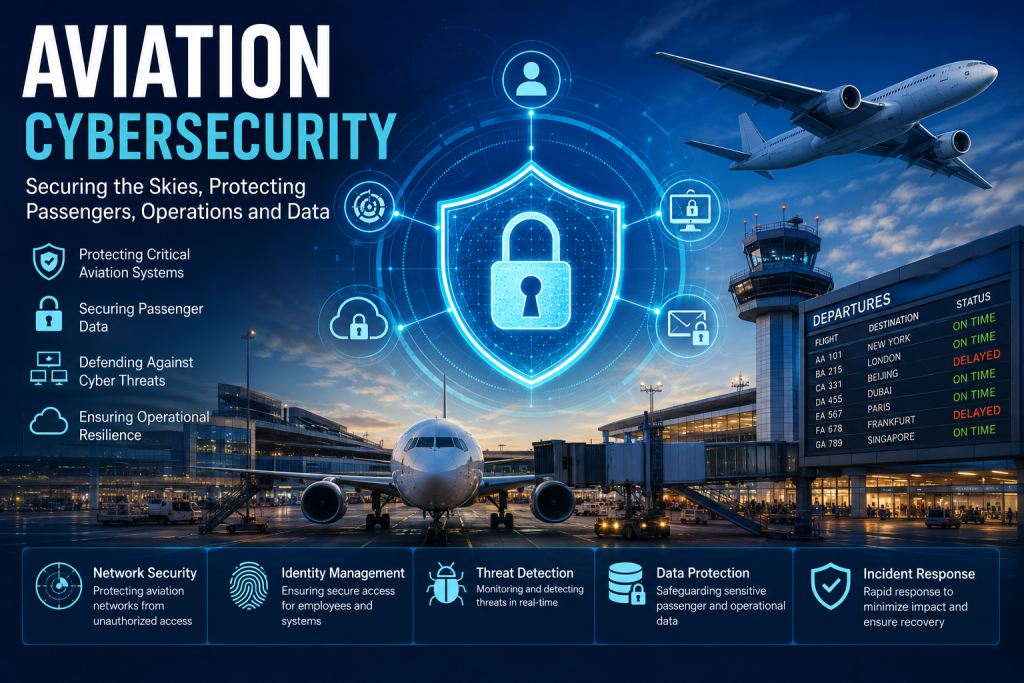

The aviation industry is rapidly embracing digital technologies to improve operational efficiency, passenger experience, and flight safety. From connected aircraft and cloud-based airline operations to biometric boarding and smart airports, digital transformation is reshaping every aspect of modern aviation. While these innovations offer significant benefits, they also expose airlines and airports to increasingly sophisticated cyber threats.
As cyberattacks targeting critical infrastructure continue to rise, aviation organizations are making cybersecurity a strategic priority. Airlines, airport operators, aircraft manufacturers, maintenance providers, and air traffic management agencies are investing in advanced security technologies to protect critical systems, operational data, and passenger information.
Digital Aviation Expands the Cyber Threat Landscape
Today’s aviation ecosystem depends on thousands of interconnected digital systems. Airline reservation platforms, mobile applications, flight planning software, baggage handling systems, airport Wi-Fi networks, aircraft communication systems, and cloud infrastructure exchange enormous amounts of data every second.
This growing digital ecosystem has created new opportunities for cybercriminals. A successful cyberattack can interrupt flight schedules, compromise passenger information, disrupt airport operations, and impact business continuity.
As aviation becomes more connected, organizations are shifting from reactive security measures to proactive cyber resilience strategies that continuously monitor, detect, and respond to emerging threats.
Airlines Increase Investments in Cybersecurity
Airlines are modernizing their digital infrastructure to improve efficiency and customer service. Mobile check-in, digital boarding passes, online payment platforms, predictive maintenance, and connected aircraft technologies have become standard across many carriers.
However, every new digital service introduces additional security risks. To reduce these risks, airlines are adopting advanced cybersecurity solutions capable of protecting operational networks, customer databases, financial transactions, and flight management systems.
Many carriers are also implementing continuous threat monitoring, endpoint protection, identity management, and AI-powered security platforms to strengthen their overall cybersecurity posture.
Smart Airports Are Becoming Prime Targets
Modern airports operate as intelligent digital hubs that integrate passenger processing, security screening, baggage management, retail services, surveillance systems, and operational control through interconnected platforms.
The increasing adoption of biometric authentication, self-service kiosks, digital identity verification, and Internet of Things (IoT) devices has significantly expanded the number of connected endpoints within airport environments.
To secure these critical assets, airport authorities are investing in technologies such as Zero Trust Architecture, multi-factor authentication, Security Information and Event Management (SIEM), Security Operations Centers (SOC), and real-time threat intelligence solutions.
These technologies help airports detect suspicious activity early while ensuring uninterrupted operations and protecting sensitive passenger information.
Connected Aircraft Create New Security Priorities
Aircraft are becoming increasingly connected through satellite communications, onboard Wi-Fi, predictive maintenance systems, digital flight records, and remote diagnostics.
Although these technologies improve operational efficiency and maintenance planning, they also introduce new cybersecurity challenges. Protecting communication channels, onboard systems, and connected aviation infrastructure has become essential for maintaining operational safety and minimizing cyber risks.
Aircraft manufacturers and airlines are therefore integrating cybersecurity into aircraft design, maintenance procedures, and operational workflows to improve resilience against evolving threats.
Regulatory Compliance Drives Market Growth
Governments and aviation regulators around the world are strengthening cybersecurity requirements for critical aviation infrastructure.
Airlines, airports, and aviation service providers are expected to implement comprehensive cybersecurity frameworks that include continuous risk assessment, incident reporting, vulnerability management, and secure system architecture.
These evolving regulatory requirements are encouraging organizations to increase investments in cybersecurity technologies and establish long-term cyber resilience programs.
Emerging Technologies Supporting Aviation Cybersecurity
The aviation industry is adopting several next-generation technologies to improve cyber defense capabilities.
Artificial Intelligence is helping security teams identify unusual network behavior and respond to threats more quickly.
Machine Learning algorithms continuously analyze operational data to detect abnormal activities before they become major incidents.
Cloud-native security solutions are protecting digital aviation platforms while enabling secure remote operations.
Zero Trust security models are ensuring that every user, device, and application is verified before gaining access to critical systems.
Threat intelligence platforms are enabling organizations to anticipate new attack methods and strengthen preventive security measures.
Together, these technologies are transforming cybersecurity from a traditional defensive function into an intelligent, predictive security ecosystem.
Competitive Landscape
The aviation cybersecurity industry includes global technology companies, defense contractors, and specialized cybersecurity providers offering solutions for airlines, airports, aircraft manufacturers, and government agencies.
Key market participants continue expanding their portfolios through strategic partnerships, technology innovation, and investments in AI-driven security platforms. Demand is increasing for managed security services, cloud security, identity management, and operational technology protection as aviation organizations modernize their digital infrastructure.
Future Outlook
The future of aviation cybersecurity is expected to be shaped by continued digital transformation across the global aviation sector. As airlines expand connected services and airports deploy more automated technologies, cybersecurity will remain a critical investment area.
Organizations are expected to prioritize AI-powered threat detection, cloud security, Zero Trust frameworks, and operational technology protection to safeguard critical aviation infrastructure. Continuous innovation, regulatory support, and growing awareness of cyber risks are likely to create significant opportunities for cybersecurity solution providers over the coming years.
With digital connectivity becoming central to aviation operations, cybersecurity is no longer viewed solely as an IT requirement—it has become an essential component of operational resilience, passenger trust, and long-term business sustainability.