
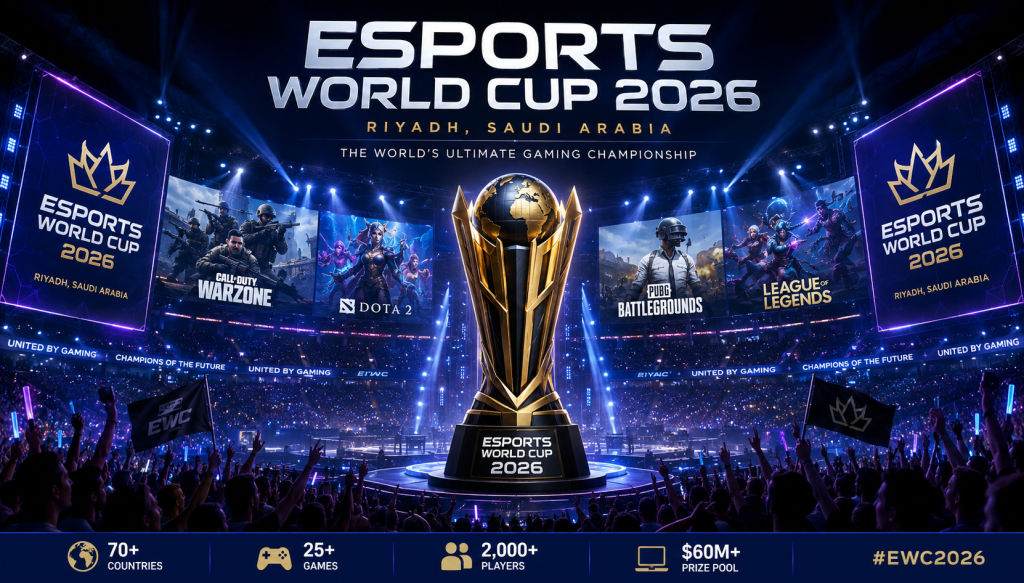

The gaming industry has evolved far beyond casual entertainment. In 2026, competitive gaming has become a global spectacle, attracting millions of viewers, elite athletes, and billion-dollar investments. At the center of this transformation is the Esports World Cup 2026, an event that is increasingly being compared to the FIFA World Cup. With national pride, world-class production, sold-out arenas, and record-breaking prize pools, the tournament is redefining how people view esports.
Just as football unites fans across continents every four years, the Esports World Cup is bringing together the world’s best gamers across multiple titles under one prestigious competition. It has become more than just a gaming tournament—it is now a global entertainment phenomenon.
A Multi-Game Tournament That Celebrates Every Genre
Unlike traditional esports championships that focus on a single game, the Esports World Cup features multiple popular titles across different genres. Fans can watch competitions in first-person shooters, multiplayer online battle arenas (MOBAs), battle royale games, sports simulations, strategy games, and fighting games.
This diverse lineup attracts audiences from every corner of the gaming community. Whether someone enjoys tactical shooters or football simulation games, there is something for everyone, making the tournament comparable to the Olympic Games of esports.
The inclusion of multiple game publishers and international teams has helped create one unified global esports festival rather than isolated championships.
Massive Prize Pools Are Raising the Stakes
Prize money has become one of the biggest attractions of competitive gaming. The Esports World Cup 2026 features one of the largest prize pools ever offered in esports history, attracting the world’s best professional players and organizations.
Large rewards have transformed esports into a serious career option. Today’s professional gamers train for several hours daily, work with coaches, analysts, nutritionists, and sports psychologists, much like traditional athletes.
Higher financial incentives also encourage greater competition, resulting in more exciting matches and unforgettable moments for fans.
National Pride Is Becoming a Major Theme
One reason the FIFA World Cup captivates billions of people is national representation. While esports has traditionally revolved around professional clubs and organizations, international tournaments are increasingly emphasizing regional identity.
Fans proudly support players representing their countries or regions, creating emotional connections similar to traditional sports. Social media is filled with patriotic celebrations after major victories, while players proudly wave national flags during championship ceremonies.
This emotional investment has significantly expanded esports beyond its core gaming audience.
Record-Breaking Viewership Around the Globe
Esports audiences continue to grow every year thanks to streaming platforms and digital media. Millions of fans now watch tournaments live from their smartphones, computers, and smart TVs.
Unlike many traditional sporting events, esports broadcasts are available globally with multilingual commentary, interactive live chats, player statistics, and instant highlights.
The Esports World Cup benefits from:
- Global livestreaming platforms
- Professional broadcasting quality
- Multiple language coverage
- Real-time fan engagement
- Social media integration
- Interactive viewing experiences
This accessibility has helped esports attract younger audiences who consume entertainment primarily through digital platforms.
Global Brands Are Investing Heavily
Major international brands no longer view esports as a niche industry. Technology companies, automobile manufacturers, financial institutions, energy drink brands, telecom providers, and apparel companies now sponsor professional teams and tournaments.
These investments support:
- Larger tournament production
- Better player facilities
- Improved broadcast quality
- Youth development programs
- Community engagement
- International expansion
Brand partnerships have also improved the professionalism of esports, making events comparable to major sporting championships.
Professional Teams Operate Like Traditional Sports Clubs
Today’s leading esports organizations resemble football clubs more than gaming communities.
Professional teams now employ:
- Head coaches
- Strategic analysts
- Performance psychologists
- Nutrition experts
- Fitness trainers
- Content creators
- Marketing specialists
Players follow disciplined schedules involving practice sessions, physical exercise, tactical reviews, and mental preparation. This structured environment has elevated competitive standards and increased the overall quality of tournaments.
Host Cities Benefit Economically
The Esports World Cup generates substantial economic activity for host cities. Thousands of international visitors travel to attend live matches, contributing to tourism, hospitality, transportation, retail, and entertainment industries.
Hotels, restaurants, shopping centers, and local businesses experience increased demand during tournament periods.
Beyond direct spending, host destinations gain worldwide exposure through livestreams watched by millions of viewers, helping promote tourism long after the competition ends.
Technology Is Enhancing the Fan Experience
Innovation is one of esports’ greatest strengths. The Esports World Cup 2026 integrates advanced technologies to create immersive viewing experiences.
Fans enjoy:
- Augmented reality stage presentations
- AI-powered match analysis
- Interactive live statistics
- Multiple camera angles
- Virtual fan experiences
- High-definition production quality
These features make esports broadcasts highly engaging and appeal to digitally native audiences who expect interactive entertainment.
A Growing Cultural Phenomenon
Esports has expanded beyond competitive gaming into mainstream culture. Professional players have become celebrities with millions of followers across social media platforms. Their influence extends into fashion, music, entertainment, and digital content creation.
Tournament opening ceremonies feature live performances, celebrity appearances, and cinematic storytelling, making the event feel similar to major international sporting competitions.
Gaming communities also organize watch parties, fan conventions, and online discussions that create year-round engagement rather than limiting excitement to tournament days.
The Future Looks Even Bigger
The Esports World Cup 2026 represents a turning point for competitive gaming. With growing investment, expanding global audiences, increasing media coverage, and continuous technological innovation, esports is moving closer to becoming one of the world’s largest entertainment industries.
As younger generations embrace gaming as both a sport and a cultural experience, the tournament’s influence will continue to grow. Universities now offer esports scholarships, governments recognize esports athletes, and businesses increasingly invest in gaming ecosystems.
Much like the FIFA World Cup transformed football into the world’s most celebrated sporting event, the Esports World Cup is establishing itself as the defining championship for competitive gaming. It symbolizes the evolution of digital entertainment into a global phenomenon where skill, teamwork, strategy, and national pride unite millions of fans across the world.